

Xeriscape Landscaping & Installation in Denver
We take the lawn out, fix what's underneath, and build a planted, low-water landscape on drip — designed for Denver's clay, sun, and water rules, not copied from a catalog.
- One team from design through planting — you deal with us, not a designer, a sod crew, and an irrigation sub separately
- Planted landscapes, not gravel lots: natives, grasses, and shrubs doing the work, with rock where it earns its place
- Drip irrigation on every planting, so establishment watering stays legal under drought rules
- Plants chosen for USDA zone 6a, Front Range clay, and 5,280 feet of sun
- Published pricing: from $6 per square foot, typically $6–$10
Get a free estimate
Tell us what you’re working with. We’ll walk the property and give you a real number.
What’s included
Walkthrough and site read: soil, sun, slope, drainage, existing irrigation, and what's worth keeping.
A design built from your site — or a starting theme from our Design Center — with a named plant list.
A program check against your water provider's rebate and your HOA's rules before anything comes out.
Sod removal and haul-off, soil decompaction, and grade corrected to move water away from the house.
Spray zones converted to drip by plant need, with emitters sized per plant.
Boulders, rock, mulch, edging, and planting — then a written establishment watering schedule.
Our xeriscape installs start at $6 per square foot and typically run $6–$10 depending on the design and materials. Wildflower-seeded and arborist-mulch options start at $4; premium themes like The Outback run $8–$12. Removing the existing sod is priced separately — our [sod removal calculator](/sod-removal-denver/) gives you that number in about thirty seconds. If you want a full plan first, the $500 design fee is credited on projects over $5,000.
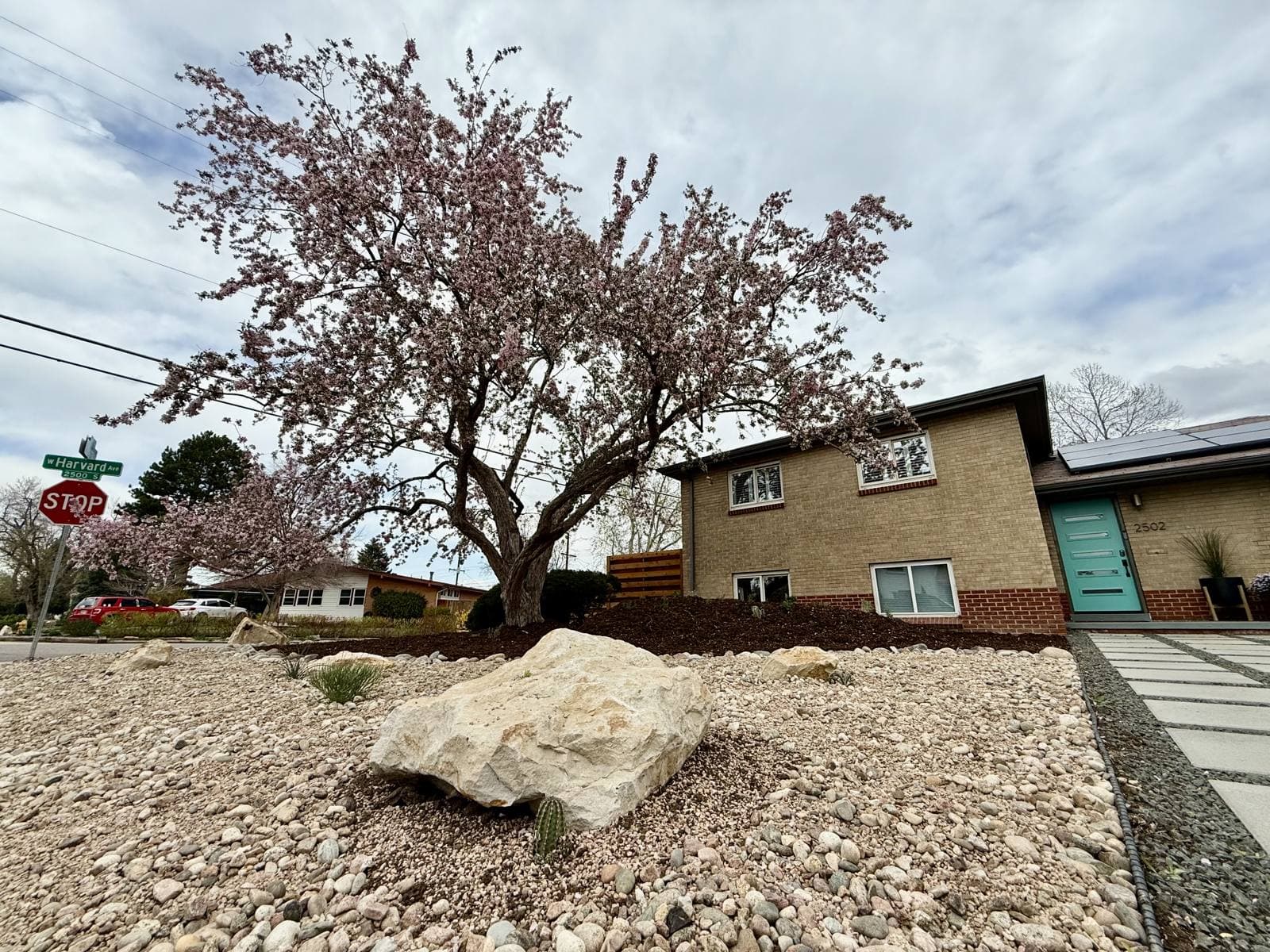
What xeriscape means on the Front Range
Denver Water coined the word "xeriscape" in 1981, and it has been misread ever since. It doesn't mean zero water and it doesn't mean rock. It means landscaping designed around the water you actually have — which, in a city that gets 14 to 15 inches of precipitation a year, is not enough to keep Kentucky bluegrass green without heavy irrigation.
In practice a good Denver xeriscape is:
- Planted. Native and adapted perennials, grasses, shrubs, and trees do most of the visual work. Rock and mulch fill the space between them and hold moisture in the soil.
- Zoned by water need. Plants that want more water sit together where water can reach them; the toughest plants go on the hot, dry edges.
- On drip. Water goes to roots, not into the air or onto the sidewalk.
- Built on corrected soil and grade. Most of what fails in a xeriscape was decided below the surface on install day.
The yards in our portfolio — like South Winona, a dead front lawn turned into a high-desert planting of agave, yucca, and succulents tucked into quarried sandstone — are what that looks like when it's done right.
How a Xeris install runs
1. Walkthrough. We walk the property with you and read the site: sun and shade through the day, soil texture and drainage, where water goes in a storm, what's worth keeping (mature trees almost always are), and how the existing sprinkler system is laid out.
2. Design. For a straightforward front yard, we can work from one of the eight themes in our Design Center — High Desert Steppe, Flowering Foothills, Rocking Tundra, and the rest — adapted to your lot. For a whole property, a phased plan, or anything with grade changes, we draw a full design plan with a named plant list and a hydrozone map.
3. Program and HOA check. Before anything comes out, we check your water provider's current rebate program and your HOA's architectural rules. Most rebate programs require approval before removal — pull the grass first and you usually forfeit the money. You apply to the program; we design to its requirements.
4. Removal. The sod and its root layer get machine-cut and hauled away — see sod removal. Bermuda grass and quackgrass run deeper than a sod cutter reaches, so we identify what you have before we quote.
5. Soil and grade. Years of irrigation and foot traffic leave a compacted layer that drains badly. We decompact it, amend selectively (most natives want lean soil, not compost-rich beds), and correct the grade so water moves away from the foundation.
6. Irrigation. Spray zones get converted to drip, with emitters sized to each plant and zones split by water need. Old heads that no longer serve anything get capped.
7. Structure, then plants. Boulders and hardscape go in first, set deep enough to look like they belong. Then plants are staged on site so you can see the layout before anything goes in the ground, planted at the right depth, and watered in. Mulch or rock groundcover finishes the beds.
8. Handoff. You get a written establishment watering schedule for the first two seasons and a walkthrough of how the drip system works.
Built for Denver conditions
Clay. Most of the metro sits on clay, and it varies from lot to lot — some drains, some holds water for days. We check before choosing plants, because the same native that thrives in one yard rots in the next.
Sun and altitude. Sun at 5,280 feet is intense, and south- and west-facing beds bake. We put the toughest steppe plants on those exposures and save the softer perennials for morning sun.
Cold and freeze-thaw. Denver is USDA zone 6a on the 2023 map (with some 6b pockets). Winters swing between cold snaps and warm, dry spells, which is hard on evergreens and on anything planted too shallow. Plant choice and planting depth handle most of it.
Water rules. Denver Water ended lawn watering on October 1, 2026, and other providers across the metro run their own restrictions. Drip for trees, shrubs, and perennials is treated as the efficient exception almost everywhere. Our city pages cover the rules by provider.
What it costs, and what moves the number
Our xeriscape installs start at $6 per square foot and typically run $6–$10. Sod removal is priced separately — the sod removal calculator gives you an instant range. Four things move a project within or above that range:
- Plant size and density. Five-gallon shrubs and larger trees cost more than one-gallon perennials; a dense planting costs more than a sparse one.
- Stone. Large boulders, flagstone paths, and dry creek beds add material and equipment time.
- Irrigation. A clean, well-laid-out system converts cheaply; a patched-together one may need new lines.
- Access and grade. Narrow side gates and slopes mean more handwork.
For the full breakdown, read what xeriscaping costs in Denver.
The first two years
A new xeriscape looks intentionally open in its first season because plants are spaced for mature size. Expect regular drip watering through the first one to two growing seasons, a little hand-weeding while plants fill in, and a spring cutback of grasses and perennials. By the third season, most plantings have closed in and need far less of everything. Our maintenance guide covers the seasonal routine.
Common questions
- How much does xeriscaping cost in Denver?
- Our xeriscape installs start at $6 per square foot and typically run $6–$10. Lower-cost options like wildflower seeding or arborist mulch start at $4, and premium designs run $8–$12. Sod removal is priced separately. What moves the number most: plant size and density, how much boulder and stone work is involved, access, and how much irrigation has to change.
- Is xeriscape just rock?
- No — and a yard of bare rock is one of the most common xeriscape mistakes. Wall-to-wall gravel gets hot, reflects heat into the house, and still grows weeds. A real xeriscape is a planted landscape: native perennials, grasses, and shrubs grouped by water need, with mulch or rock between them and stone used as structure, not filler.
- How much water does a xeriscape need?
- Newly planted, it needs regular water for the first one to two seasons while roots establish. Once established, most native plantings need little supplemental water beyond what falls in a normal year — occasional deep watering in long dry stretches. That establishment period is why every planting we install goes on drip.
- Can I xeriscape during Denver Water's lawn watering ban?
- Yes. Denver Water's ban, in effect from October 1, 2026, is on lawn watering. Hand-watering and low-volume, non-spray irrigation like drip for trees, shrubs, and perennials is still allowed. A new planting on drip can be watered through establishment; a new lawn can't.
- When is the best time to xeriscape in Denver?
- Fall is the best planting window — warm soil, cooler air, and roots that establish before summer. Spring is second. Winter is the best time to design, because native nurseries sell out of popular species by early May and plant orders go in during late winter.
- Can my HOA stop me from xeriscaping?
- Not outright. Colorado law (C.R.S. 38-33.3-106.5) limits an HOA's ability to prohibit xeriscape or drought-tolerant landscaping on your lot. The association can still require architectural approval and reasonable design standards — we prepare a plan and plant list that make that submittal straightforward.
- Will a xeriscape look sparse at first?
- For the first season, somewhat — plants are spaced for their mature size, not packed to look full on day one. Most plantings fill in over the second and third seasons. Packing it tight to look finished immediately gives you a thinning job in year three.
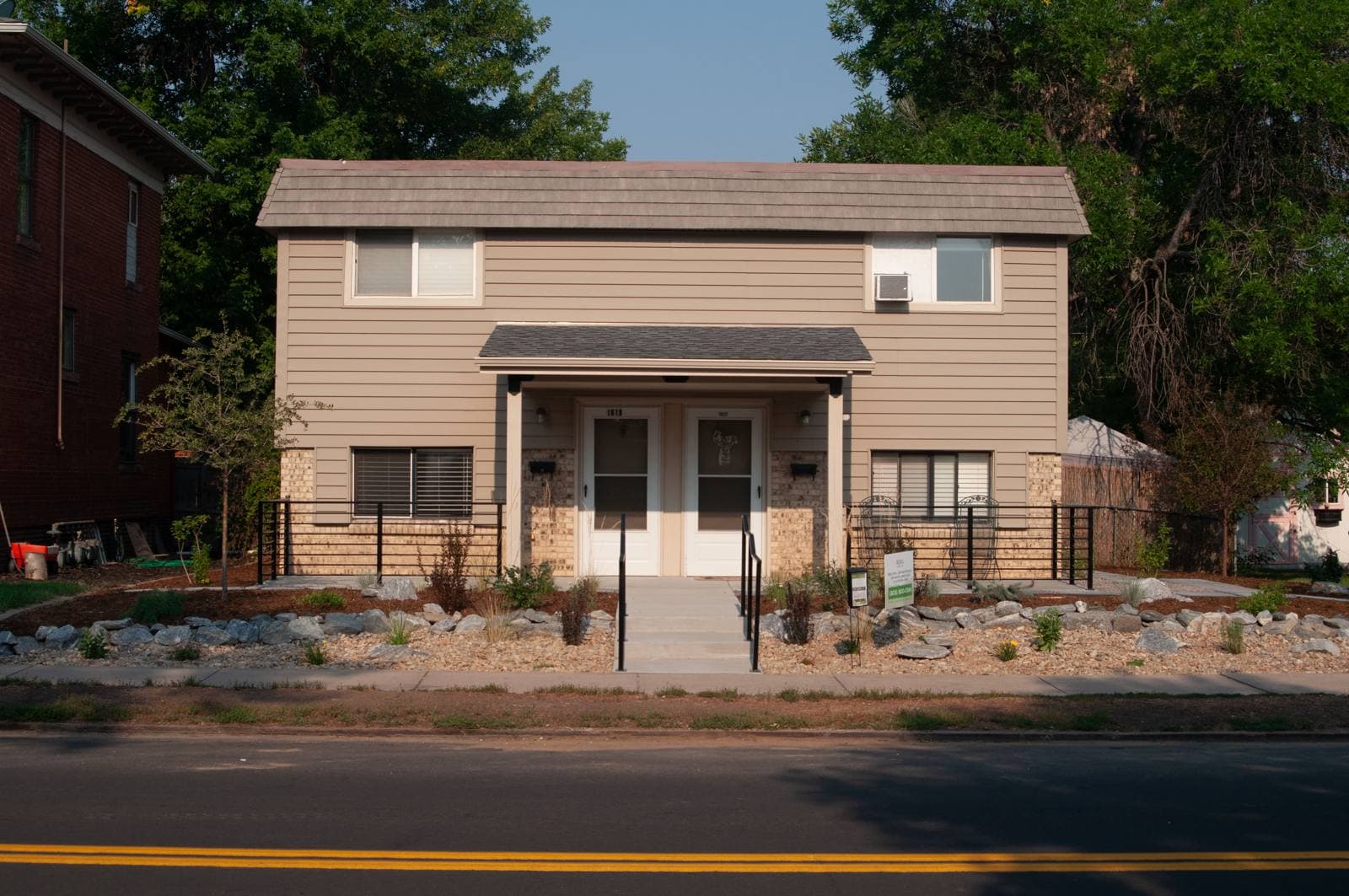
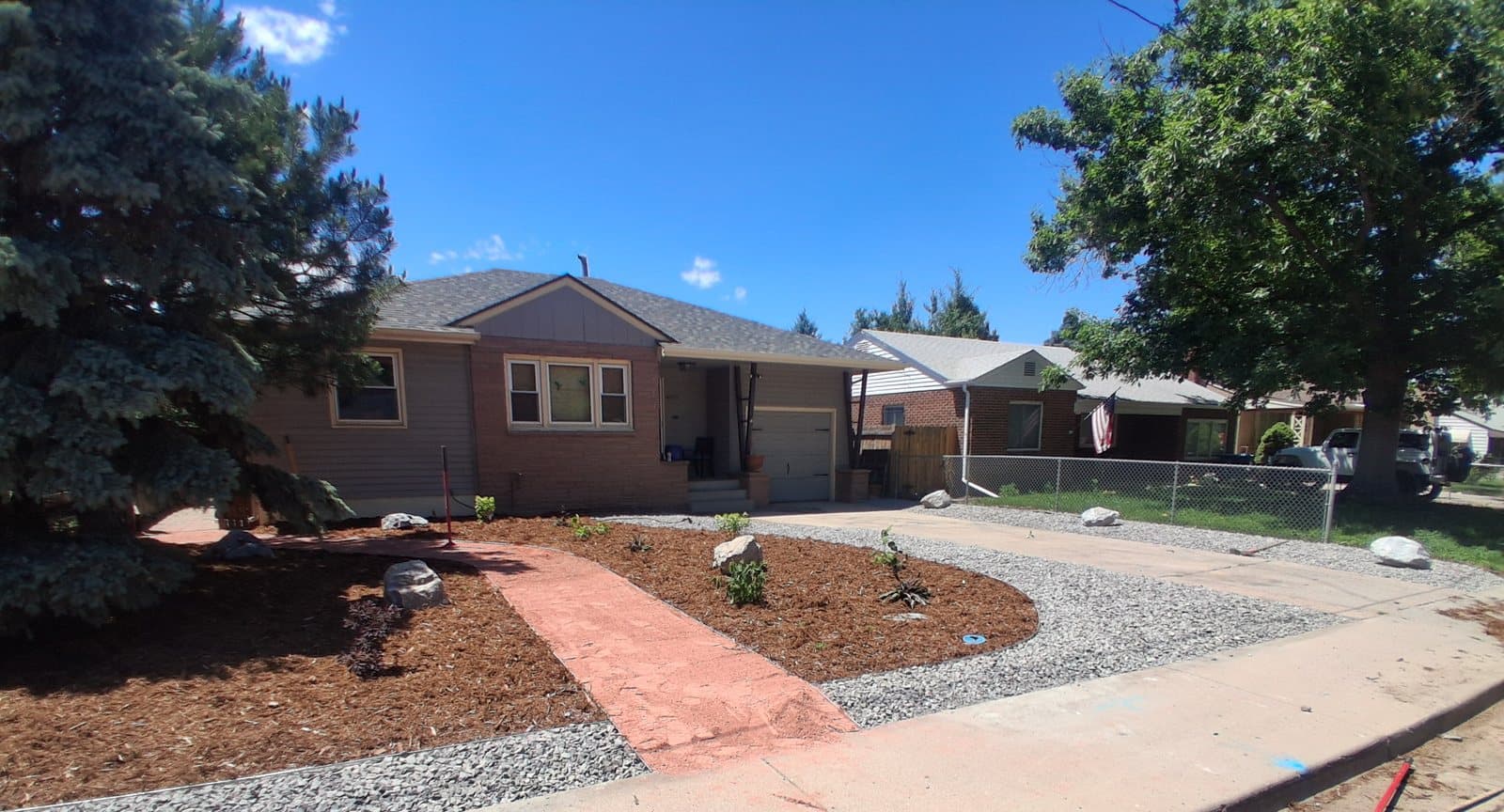
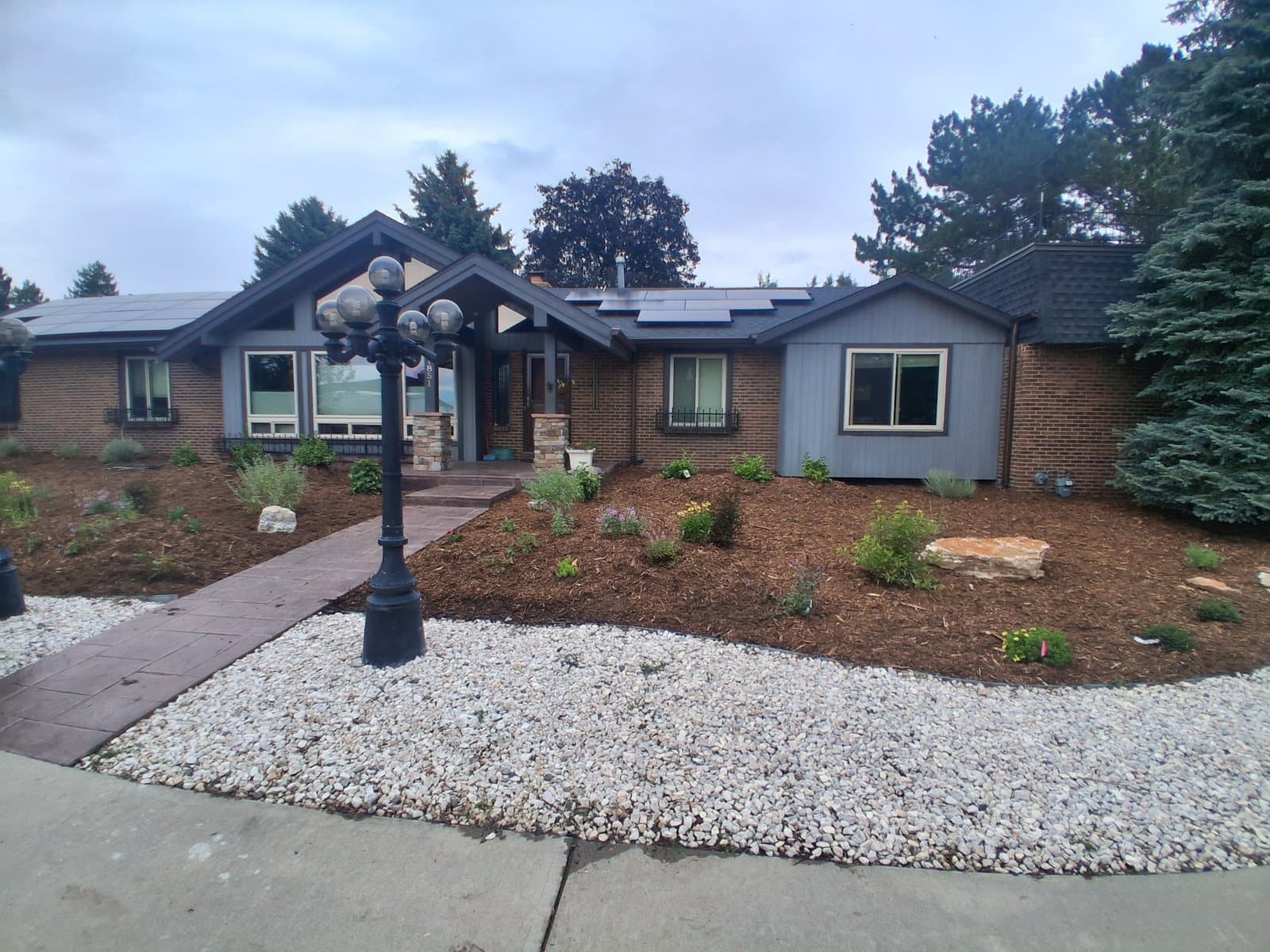
Read more
What xeriscaping costs in Denver
What xeriscaping costs in Denver in 2026: our per-square-foot prices, what yards of different sizes run, what moves the number, and which rebates are open.
Xeriscaping in Denver: the basics
What xeriscaping is, why it fits Denver's climate and 2026 water rules, the seven principles, plants that thrive here, what it costs, and how to get started.
Top native plants for a Denver xeriscape
The 10 native plants we lean on for Denver xeriscapes, plus the shrubs, grasses, and groundcovers that back them up, matched to sun, clay, and season.
Xeriscaping mistakes to avoid
Avoid costly mistakes in your Denver xeriscape project. Learn the top 7 xeriscaping errors and how to design a thriving, low-water landscape that looks great.
How to maintain a xeriscape
Xeriscapes are low-maintenance, not zero-maintenance. Here is the complete seasonal care guide for Denver xeriscape owners: spring drip checks, summer.
Xeriscape rebates around Denver
Denver Water's 2026 xeriscape rebate program is closed — but other Front Range programs are still active.
Where we work
We’re Denver-based and work across the metro. Water rules and rebates depend on your provider — each city page covers yours.
Ready to get a number?
We design and build water-wise landscapes across the Denver metro. Free walkthrough, honest scope, no pressure.