

Xeriscape Rebates in Denver: How to Get Money Back for Replacing Your Lawn
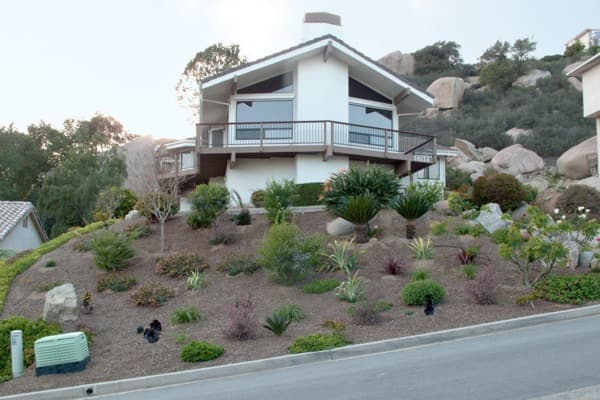
Replacing your lawn with a xeriscape isn't just good for the environment — it's good for your wallet. Denver Water and several Front Range utilities pay customers to rip out water-hungry turf and replace it with drought-tolerant landscaping. For a summary of rebate programs across Colorado Springs, Fort Collins, Aurora, and other Front Range utilities, see our complete Colorado xeriscape guide. In 2026, demand for these rebates hit record highs, and Denver Water's allocation ran out before spring even ended.
If you missed the window this year, you're not out of luck. There are still active programs in the metro area, and getting on the right list now means you're first in line when Denver Water reopens applications in 2027.
This guide covers every active program, exactly what qualifies, how to apply, and how to stack rebates for the biggest return.
Why Denver Pays You to Xeriscape
Colorado is deep into a long-term drought cycle. Denver Water has been managing Stage 1 drought conditions in 2026, and outdoor irrigation accounts for roughly 50% of residential water use in the summer months. Turf grass is the single biggest culprit — it requires three to four times more water per square foot than native plants, grasses, or ground covers.
The math is simple for utilities: paying you $750 to remove your lawn is cheaper than building new reservoir capacity. So they do it, and they compete on who gets the money out the door fastest.
For homeowners, a xeriscape conversion doesn't just earn a rebate — it cuts outdoor water bills by 50–75% annually. On a typical Denver home with 1,000 square feet of turf, that's $300–$600 back in your pocket every year, on top of the upfront incentive.
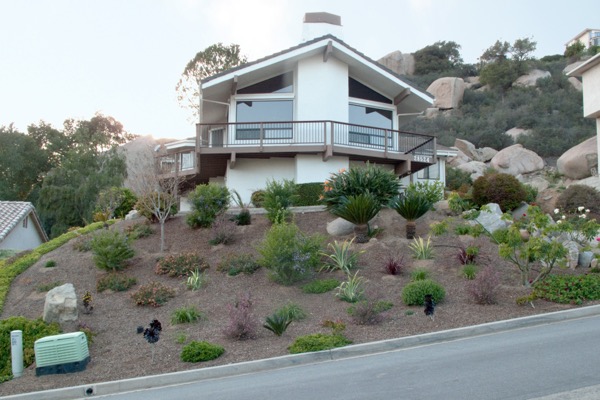
A finished xeriscape conversion — drought-tolerant, low maintenance, and rebate-eligible.
Denver Water's 2026 Rebate Program: What Happened
Denver Water partnered with Resource Central to offer residential customers up to $750 toward turfgrass removal in 2026. The program ran on a first-come, first-served basis — and it was gone before the end of March.
As of March 28, 2026, Denver Water announced: "Due to popularity, turfgrass removal discounts for 2026 have all been allocated to customer projects for the year. Resource Central is no longer accepting new applications."
The $750 could also be applied toward Garden In A Box kits — Resource Central's curated water-wise planting kits delivered directly to your door.
What the Program Required
Even though 2026 applications are closed, the requirements are consistent year to year. For 2027, expect the same rules:
- Minimum 200 square feet of water-intensive turf must be removed
- No artificial turf as the replacement — living plant material required
- Pre-approval required before work starts (retrofitting after the fact doesn't qualify)
- Submit a photo of the area and a landscape plan showing the replacement plantings
- Final inspection or photo documentation after completion
How to Get Ready for 2027
Denver Water opens applications at the start of each year. In 2026, the program was fully subscribed by late March. To get a slot in 2027:
- Get on Resource Central's notification list at resourcecentral.org/lawn — they email when applications open
- Plan your project now — have your 200+ sq ft area identified, measurements ready, and a rough planting plan drafted
- Submit the day applications open — don't wait a week
Working with a licensed landscaping contractor before you apply strengthens your submission. We help Xeris customers draft qualifying plans at no extra charge.
Other Front Range Programs Active Right Now
Denver Water isn't the only game in town. Several neighboring utilities have active programs, and if your service area falls under one of them, you can act now.
Aurora Water
Aurora Water offers rebates for replacing bluegrass with low-water landscaping. Check auroragov.org for current incentive amounts and availability — Aurora's program runs on different timelines than Denver Water.
Castle Rock Water
Castle Rock Water Conservation offers ColoradoScape conversion rebates. Like Denver Water, replacement must include living plant material — synthetic turf alone doesn't qualify. Details at crconserve.com.
Parker Water & Sanitation District
PWSD offers lawn replacement discounts in partnership with Resource Central. Availability is limited and first-come, first-served. Check pwsd.org for current status.
Broomfield
The City of Broomfield runs a turf replacement program through Resource Central. Details at broomfield.org.
Westminster, Thornton, Superior, and Erie
All four utilities have active programs or are in partnership with Resource Central for lawn replacement incentives. If you're in any of these service areas, visit your utility's website or search " lawn replacement rebate" for current programs.
How Much Can You Actually Save?
Let's put real numbers to a typical project.
Example: 800 sq ft front yard conversion in Denver
Item
Amount
Denver Water rebate (2027)
$750
Annual water savings (50% reduction)
~$400/yr
Reduced lawn maintenance (mowing, fertilizer, aeration)
~$300/yr
Total Year 1 return
~$1,450
Total over 5 years
~$4,200
The rebate covers 15–25% of typical installation costs, depending on the scope and materials. But the ongoing savings are where the real ROI compounds. A well-designed xeriscape pays for itself within 3–5 years and keeps paying after that.
For a full breakdown of installation costs, read our guide: How Much Does Xeriscape Cost in Denver?
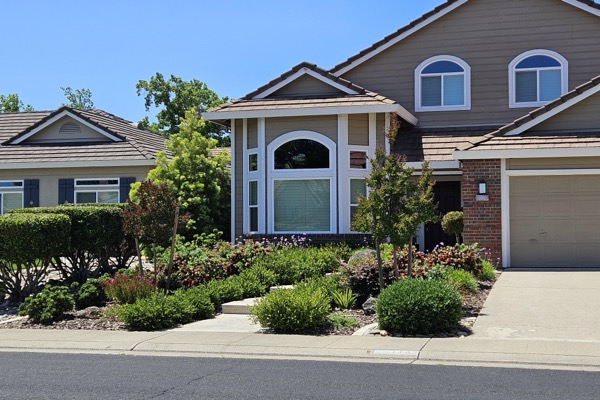
Rock mulch, native plants, and gravel paths replace water-hungry turf — reducing annual water use by 50–75%.
What Qualifies as a Rebate-Eligible Xeriscape?
Not every landscaping project qualifies. Here's what the programs consistently require:
Approved Replacement Options
- Native and drought-adapted plants — shrubs, perennials, grasses, groundcovers
- Decorative mulch, rock, or gravel (within limits — usually no more than 30–50% of the area)
- Permeable hardscape like decomposed granite or flagstone
- Drip irrigation systems
What Doesn't Qualify
- Artificial turf (universally excluded from Denver-area programs)
- Standard concrete or impermeable hardscape
- Non-native plants with high water requirements
Programs also typically require reduced irrigation demand after conversion — meaning you can't just replace grass with plants that need the same amount of water. A qualified xeriscape design using native and adapted species easily meets this threshold.
The Application Process, Step by Step
For Denver Water (and most Resource Central partner programs), the process follows the same flow:
Step 1: Check availability
Visit resourcecentral.org/lawn or your utility's rebate page. Confirm the program is open and slots remain.
Step 2: Submit your application before you start
This is the most common mistake — people do the project, then try to claim the rebate. Pre-approval is required. You'll need:
- Your utility account number
- Square footage of turf being removed
- Photos of the existing turf
- A basic plan for what's going in
Step 3: Get approved
Resource Central reviews your application. For most qualifying projects, approval is straightforward. You may receive a virtual consultation.
Step 4: Complete the project
Remove the turf, install the new landscaping per your approved plan. Keep receipts.
Step 5: Submit completion photos
Final documentation typically includes photos of the finished space. Resource Central verifies and processes the rebate.
Step 6: Collect your money
Rebates are typically issued as a check or credit toward Resource Central services within a few weeks of approval.
Stacking Rebates: How to Maximize Your Return
A few homeowners know this trick — multiple programs can sometimes be combined.
Denver Water + federal tax credits: Certain water-efficient irrigation upgrades (like drip systems or smart controllers) may qualify for energy/water efficiency credits. Check with your tax advisor.
Denver Water + utility rebates on smart irrigation: Denver Water also offers rebates on smart sprinkler controllers separately from turf removal. If your project includes irrigation updates, apply for both.
Denver Water + Garden In A Box: The $750 discount can be split between turfgrass removal services and up to four Garden In A Box kits — a great option if you're doing a partial conversion or want a lower-maintenance DIY approach for one section.
Frequently Asked Questions
Can I do the work myself and still get the rebate?
Yes. DIY projects qualify as long as you meet all the requirements (minimum square footage, pre-approval, no artificial turf, living plant replacement). The rebate covers the turf removal service through Resource Central — or if you're doing it yourself, the credit applies to Garden In A Box kits.
Does my rental property qualify?
Denver Water rebates apply to customers receiving a water bill from Denver Water or qualifying providers. If the rental property has its own water account under Denver Water, it may qualify. Check with Denver Water directly.
What if I only want to remove part of my lawn?
You need a minimum of 200 square feet to qualify. That's roughly a 14×14 ft area — common for a side yard strip or a section of front lawn. You don't have to convert everything at once.
Can I use artificial turf as the replacement?
No. All Denver-area programs explicitly exclude artificial turf as the qualifying replacement. It must be living plant material (plus mulch/rock within limits).
Will the rebate cover my entire project cost?
At $750, it typically covers 15–25% of a professionally installed conversion, depending on scope. It's a meaningful offset, not a full subsidy. The ongoing water savings are where the long-term math works in your favor.
I'm outside Denver Water's service area. What do I do?
Check your utility bill to see who provides your water service, then search " lawn replacement rebate" or visit their website directly. Resource Central partners with utilities across the Front Range — there's a reasonable chance your provider has a program.
Getting Started in the Right Order
The rebates are real, the savings are real — but the programs are competitive and move fast. Here's the priority order:
- Identify your water provider — your bill tells you exactly who it is
- Check current program status — don't assume last year's program is still open
- Get on notification lists — Resource Central emails when applications open
- Plan your project now — have measurements, photos, and a planting concept ready before applications open
- Work with a contractor who knows the process — pre-approval is more likely when your plan is professional and clearly meets the requirements
Xeris Landscaping has walked clients through the Denver Water and Resource Central process multiple times. We know what the reviewers want to see, and we help you put together a qualifying application before we touch a shovel.
Get a free estimate and rebate consultation →
The Bottom Line
Denver Water's 2026 program is closed. But the opportunity is still there — for homeowners in Aurora, Castle Rock, Parker, Broomfield, and other Front Range cities, and for anyone in Denver who wants to be positioned first when 2027 applications open.
The combination of rebate + annual water savings + reduced maintenance makes xeriscape one of the best-returning home improvements you can make in Colorado. The rebate programs are just the catalyst.
Explore what a xeriscape looks like on a Denver property →
Ready to Apply for Your Denver Water Rebate?
Xeris handles the design, installation, and paperwork for xeriscape projects across Denver — including helping you navigate the rebate process. Request an estimate and we'll walk your yard.
Xeris does this work. See our Lawn & Turf Removal service in Denver — what's included, what it costs, and how to get a free walkthrough of your property.