

Xeriscaping in Denver: The Complete Guide to Water-Efficient Landscaping
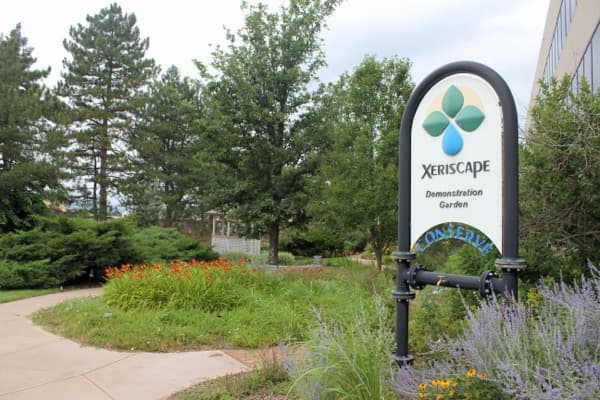
Your lawn shouldn't need a sprinkler system running 24/7 to stay alive. Yet that's exactly what most Denver yards do — pumping thousands of gallons of water into grass that evolved on the Great Plains, not in Colorado’s high-altitude, semi-arid climate. For a full breakdown of how xeriscape works across the Front Range — including HOA laws, plant palettes, and rebates — see our complete Colorado xeriscape guide.
There's a better way. It's called xeriscaping, and it's not some trendy design philosophy. It's the practical, beautiful answer to landscaping in Denver.
In this guide, we'll walk you through what xeriscaping actually is, why it makes sense for Colorado yards, how much it costs, which native plants thrive here, and how to decide if it's right for your home.
What Is Xeriscaping? (And Why Denver Needs It)
Xeriscaping comes from the Greek word "xeros," meaning dry. It's a landscaping approach designed for arid and semi-arid climates — places like Denver. Colorado State Extension has published extensive research on water-wise landscaping techniques adapted to our region.
The core idea: design your yard to work with your climate instead of against it.
Instead of fighting to keep a Kentucky bluegrass lawn alive in Colorado, xeriscaping embraces native and adapted plants that thrive on Denver's actual rainfall — about 14 inches per year. Compare that to the national average of 38 inches. Your lawn is working 3x harder than it should.
The Denver Climate Reality
Denver sits at 5,280 feet — the Mile High City — with conditions that punish traditional landscaping:
- Very low humidity, often under 40%
- Intense UV exposure, stronger at altitude
- Short growing season with frost risk from May through September
- Heavy clay soil that's dense and doesn't drain well
- Extreme temperature swings — 60°F one day, 30°F the next
- Wind that keeps plants dry and under constant stress
A traditional lawn plus hybrid plants equals a constant struggle. Xeriscaping means working with reality.
The Benefits of Xeriscaping in Denver
Massive Water Savings
A typical Denver lawn uses 40,000–60,000 gallons per year. A well-designed xeriscape uses one-third to one-half that. The EPA WaterSense program has documented water savings of 50–75% with proper xeriscaping design.
That's not just greener for the environment — it's greener for your wallet. Average water savings run $30–$60 per month, or $360–$720 per year. Over ten years, that's $3,600–$7,200. With city water rates rising 3–5% annually, that gap only widens. We've detailed the exact costs and payback timeline here.
Lower Maintenance
Xeriscaping isn't a "no maintenance" yard. It's a smarter maintenance yard.
What you're not doing: mowing every week during summer, watering three to four times per week, fighting weeds in a dense lawn, replacing dead plants constantly.
What you are doing: light pruning in spring, occasional weeding, minimal watering during the establishment phase, and enjoying 20+ years from hardy perennials. Over ten years, xeriscaping saves roughly 40–50 hours of maintenance time.
Year-Round Color and Interest
This is the part most people get wrong: xeriscaping doesn't mean rocks and brown. Done well, a xeriscape offers spring wildflowers — lupines, columbine, blanket flower — summer ornamental grasses and salvias, fall golden grasses and late bloomers, and winter structure from seed heads and evergreens. You get more visual interest, not less. Browse our complete plant selection guide to see what thrives.
Increased Property Value
Studies show that drought-tolerant landscaping increases home value by 5–15% in water-conscious markets like Denver. Buyers see a xeriscape and think: lower bills, less maintenance, smart design.
Resilience to Drought and Extreme Weather
Denver had two 500-year droughts in the last 20 years. More are coming. A xeriscape isn't just pretty during normal years — it survives the bad ones. Native plants have roots that go 10–20 feet down. They're built for exactly this.
Xeriscaping Costs in Denver
Let's be direct: xeriscaping has an upfront cost. It's not cheaper than laying down grass. But the payback window is quick.
Installation Costs
- Site prep (removing lawn, amending soil): $0.50–$1.50/sq ft
- Hardscape (pavers, mulch, gravel): $1.00–$3.00/sq ft
- Soil amendment and drainage: $0.50–$1.00/sq ft
- Plant material (native shrubs, perennials): $2.00–$5.00/sq ft
- Irrigation (smart drip system, optional): $1.00–$2.00/sq ft
- Total: $5.00–$12.50/sq ft
Real-World Examples
- Small front yard (500 sq ft): $2,500–$6,250
- Full yard transformation (2,000 sq ft): $10,000–$25,000
- High-end design with hardscape (3,000 sq ft): $15,000–$37,500
These are installed costs. Material-only is 30–40% less. For a detailed breakdown and ROI analysis, see our xeriscaping cost guide.
Payback Period
Using $500/year water savings as a baseline: a $2,500 install breaks even in 5 years. A $10,000 install in 20 years. For larger projects, the value bump in property value often covers a significant portion of the cost. If you're staying in your home for 10+ years, xeriscaping is an investment that pays for itself.
Best Plants for Xeriscaping in Denver
The secret to a successful xeriscape: choose plants already adapted to Denver's conditions. We've compiled a comprehensive guide to native plants for Denver xeriscaping with full details on each species.
Low-Water Shrubs
- Serviceberry — white flowers, edible berries, 12–15 ft, full sun to part shade
- Gambel Oak — native, turning colors in fall, 15–25 ft
- Fernbush — delicate foliage, aromatic, 3–4 ft
- Rabbitbrush — golden fall color, pollinators, 3–5 ft
- Chokecherry — spring blooms, wildlife food, 15–25 ft
Ornamental Grasses
- Blue Fescue — silvery blue, 12–18 inches, edging plant
- Feather Reed Grass — tall, airy, 3–4 ft, dramatic movement
- Sideoats Grama — native prairie grass, 18–24 inches
- Festuca — fine texture, drought-tolerant, 2–3 ft
Perennials and Wildflowers
- Lupines — iconic Colorado flower, 24–36 inches, purple/blue
- Columbine — delicate, nodding blooms, shade-tolerant, 18–24 inches
- Blanket Flower — orange-red, long blooming, 18–24 inches
- Catmint — fragrant, purple blooms, pollinator magnet, 24–36 inches
- Salvias — dozens of varieties, long blooming, 18–48 inches
- Yarrow — flat-topped flowers, yellow/pink/red, drought-tough, 24–36 inches
Low-Water Ground Covers
- Sedum — succulent varieties, low-growing, varied colors
- Pussytoes — native, pink/white blooms, 12–18 inches
- Creeping Juniper — evergreen, structural, 12–24 inches tall, 4–6 ft wide
How to Design Your Denver Xeriscape
Step 1: Assess Your Conditions
Before picking plants, understand your yard. How much sun does each area get — full sun (6+ hours), part sun (3–6 hours), or shade? What's your soil like — dense clay, fast-draining sand, or amended? Is the lot flat, sloped, or dealing with drainage issues? Denver's thin air means south-facing areas get much hotter. West-facing gets afternoon scorching. North-facing stays cooler.
Step 2: Plan Zones by Water Need
Group plants by thirst level. An oasis zone near the house or patio can include regular perennials. A transition zone in the middle handles low-water shrubs and grasses. A dry zone at the back uses hardy natives that need minimal watering after establishment. This lets you use smarter irrigation — we recommend drip irrigation over spray systems for superior water efficiency and plant health.
Step 3: Hardscape First
Before adding plants, think about structure: pavers and patios for sitting areas and water runoff control; mulch beds to retain moisture, define plant areas, and control weeds; gravel for drainage, texture, and low-cost filler; raised beds to improve drainage. Hardscape accounts for 40% of visual impact but only 20% of ongoing care.
Step 4: Choose and Plant
Space plants for mature size — they'll grow. Cluster by water needs. Use native plants where possible. The first two years are the critical establishment phase, requiring more watering and monitoring. After that, you're mostly hands-off.
Xeriscaping Mistakes to Avoid
Mistake #1: Thinking Xeriscape Means No Watering
New xeriscapes need water. The first year especially, you're establishing roots. Expect to water weekly the first growing season, then taper off significantly.
Mistake #2: Too Much Mulch or Rock
Rocks heat up in Denver's sun and stress plants. Thick mulch blocks air and creates disease conditions. Use 2–3 inches of wood mulch — cedar or aspen — and replace every 2–3 years.
Mistake #3: Wrong Plants for Your Zone
Not every drought-tolerant plant likes Denver. Some prefer hotter, lower elevations. Do your research or work with a specialist who knows the Front Range.
Mistake #4: Bad Soil Prep
Denver's clay is heavy. Amend before planting — work in compost, peat, or perlite to improve drainage. Bad soil means dead plants regardless of what you choose.
Mistake #5: Planting Too Dense
It's tempting to fill the yard at planting. But plants grow. Dense planting means disease, poor air circulation, and overcrowding. Space generously, use mulch to fill gaps, and let plants mature into their space.
Is Xeriscaping Right for You?
Xeriscaping works if you're staying in your home 5+ years, you want to reduce water bills and maintenance, you like native plants and natural design, you value environmental impact, and you're willing to invest upfront for long-term savings.
Xeriscaping might not work if you want a traditional lawn, you plan to sell in 2 years, your HOA requires grass, or you have a very shaded wet yard that needs a different approach.
Frequently Asked Questions
Will a xeriscape look boring?
No. A well-designed xeriscape offers year-round color, texture, and movement. Most people are surprised how vibrant they are once established.
Do I need to remove my lawn entirely?
Not necessarily. You can convert gradually or keep a small lawn area. Talk to a designer about a hybrid approach that gives you the best of both.
What about shaded areas?
Denver has great shade-tolerant plants: columbine, hellebores, and shade-loving shrubs. Xeriscaping works for shade too — it just uses a different plant palette.
How long until my xeriscape looks mature?
Two to three years. That's when plants fill in and the design reads fully. It's worth the wait — the landscape gets better every year, not worse.
Can I do this myself?
You can, especially small projects. Soil prep and irrigation are the trickiest parts. Many people DIY the design but hire professionals for the heavy lifting.
Will I save money on my water bill?
Typically $30–$80 per month depending on yard size and previous lawn coverage. That's $360–$960 per year.
Ready to Start Your Xeriscape?
Xeris builds xeriscape landscapes across Denver and the Front Range — native plants, drip irrigation, decomposed granite, and design that actually reflects Colorado. Request an estimate and let's walk your yard.