

Top 10 Native Plants for a Thriving Denver Xeriscape
A Denver xeriscape lives or dies on plant choice. Pick plants that evolved on the Front Range and you get a yard that handles clay, hail, 100-degree July afternoons, and a -10°F January night without constant babysitting. Pick the wrong ones and you're replacing dead plants every spring.
Denver sits in USDA Hardiness Zone 6a on the 2023 USDA map (winter lows of -10°F to -5°F), with some warmer 6b pockets in the urban core and colder 5b spots toward the foothills. It averages about 14 inches of precipitation a year. Everything below handles both halves of that equation: cold and dry. When we plan a native planting, this is the short list we start from.
The top 10
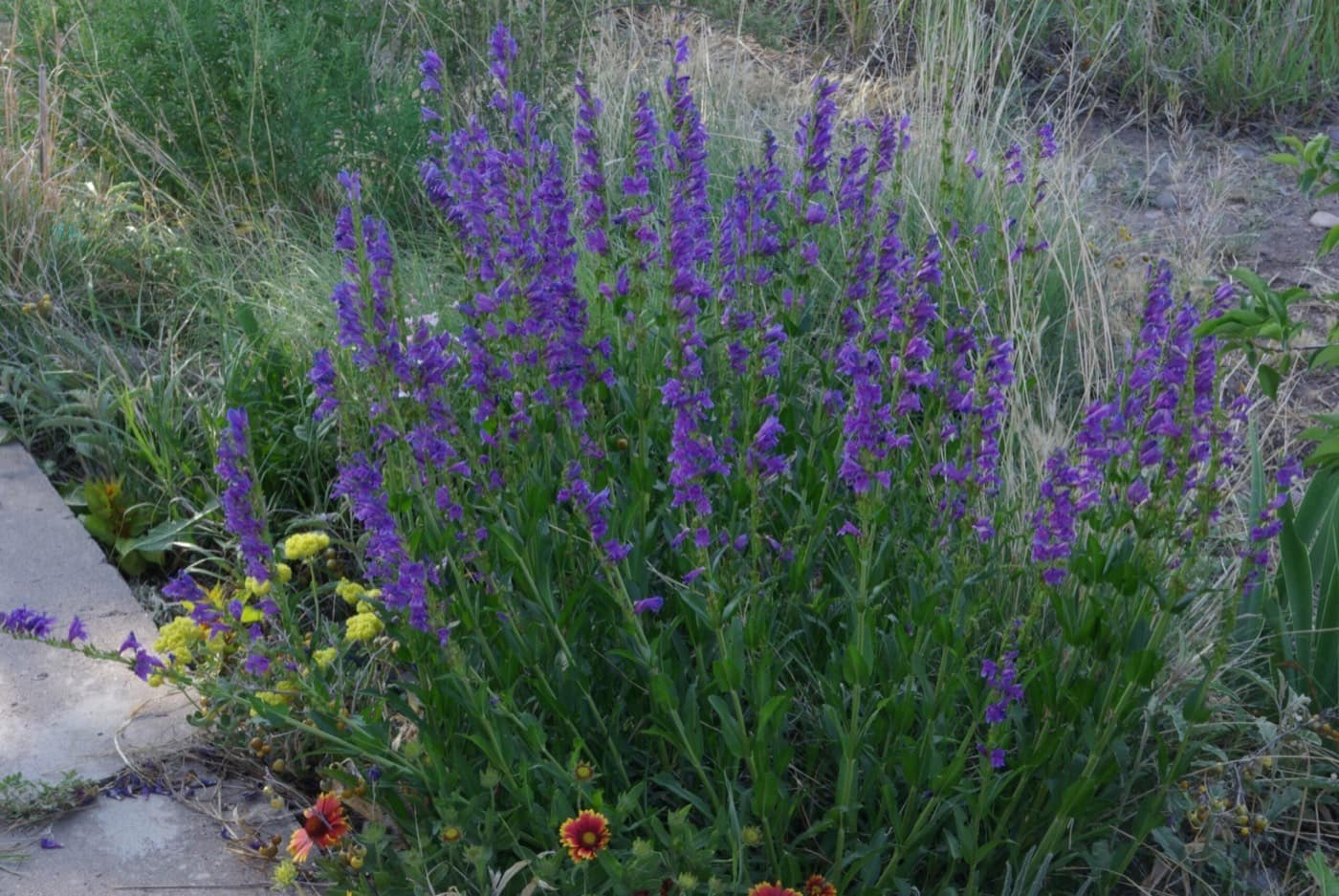
1. Rocky Mountain penstemon (Penstemon strictus)
Perennial · blooms late spring to early summer. Tall spikes of blue-purple flowers, a hummingbird favorite, and vertical interest for sunny borders and dry slopes. For a shorter penstemon with pink-magenta flowers, look at bearded penstemon.
2. Blue grama (Bouteloua gracilis)
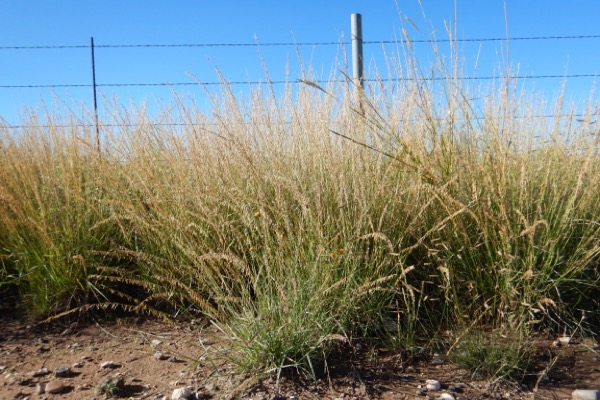
Perennial grass · summer. Colorado's state grass. Low, fine-textured, soft underfoot, with eyelash-shaped seed heads. It's one of the best ways to replace thirsty turf with something that still reads as "lawn" from the street.
3. Blanket flower (Gaillardia aristata)
Perennial · late spring through fall. Red-and-yellow daisies for months, happy in poor soil, busy with bees and butterflies. Plant profile.
4. Rabbitbrush (Ericameria nauseosa)
Shrub · late summer to fall. Silver-gray foliage and a blast of yellow flowers in September, when almost everything else is fading. Built for hot, dry, sunny spots. Plant profile.
5. Prairie coneflower (Ratibida columnifera)
Perennial · mid-summer to early fall. Also called Mexican hat. Drooping red-and-yellow petals around a tall cone. Full sun, well-drained soil, and it pairs well with native grasses.
6. Pinyon pine (Pinus edulis)
Small evergreen tree. Slow-growing, drought-hardy structure and year-round green. Good bird habitat. For more tree options, see our list of 14 tough trees that thrive in Denver.
7. Showy milkweed (Asclepias speciosa)
Perennial · summer. A monarch butterfly host plant with fragrant pink flower clusters. Tolerates clay and dry spells, and spreads by roots, so give it room. Plant profile.
8. Big sagebrush (Artemisia tridentata)
Shrub. Silvery foliage, that unmistakable scent, and good erosion control on dry slopes and berms. Use it as an anchor in the driest part of the yard. Plant profile.
9. Sulphur flower buckwheat (Eriogonum umbellatum)
Groundcover perennial · early to mid-summer. Low mats with bright yellow flower heads that pop against gravel. Made for rock gardens and berms. Plant profile.
10. Gambel oak (Quercus gambelii)
Deciduous small tree or large shrub. A foothills native that tolerates poor soil and drought, with red-orange fall color. It suckers, so plan where you want it to spread.
Native vs. adapted: what we mean
A native plant evolved here. An adapted plant came from somewhere with a similar climate and does well in Denver without extra water. Both belong in a xeriscape. Natives carry more of the load for pollinators and wildlife, and they're the least likely to sulk through a dry August. Below, each plant is labeled so you know which is which.
Watch out for "drought-tolerant" plants from Arizona or California. Many handle heat fine and then die in a Denver January.
Shrubs: the backbone
Shrubs give the yard structure in all four seasons. Space them for mature size and fill the early gaps with mulch, not extra plants.
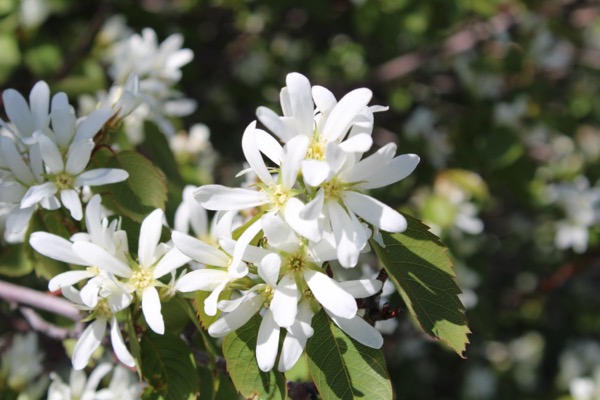
Serviceberry (Amelanchier) — native. 6–15 ft depending on species. Full sun to part shade, low water once established. White flowers in early spring, berries the birds strip in summer, orange fall color.
Mountain mahogany (Cercocarpus montanus) — native. A tough, upright foothills shrub with feathery seed plumes that catch the late-day light. Plant profile.
Three-leaf sumac (Rhus trilobata) — native. Dense, rounded, and red-orange in fall. Good for screening and slopes. Plant profile.
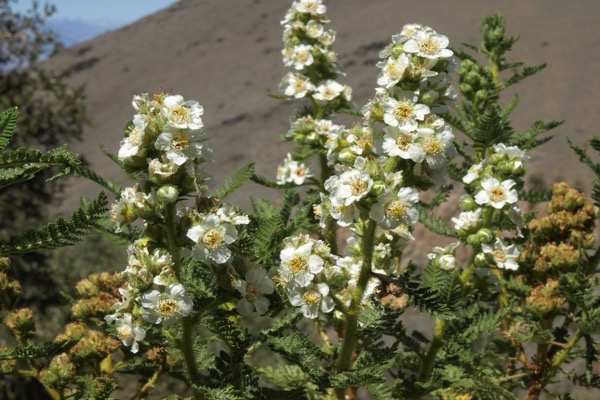
Fernbush (Chamaebatiaria millefolium) — Western native. 3–6 ft, full sun, very low water. Aromatic, fern-like leaves and white flower spikes in late summer. Deer tend to leave it alone.
Chokecherry (Prunus virginiana) — native. 15–25 ft, sun to part shade. Fragrant white flowers in spring, dark fruit birds love, burgundy fall color. Watch for black knot and prune out infected branches.
Wax currant (Ribes cereum) and Boulder raspberry (Rubus deliciosus) — native. Two mid-size shrubs that handle part shade better than most xeric plants. Wax currant · Boulder raspberry.
Grasses: texture and movement
Grasses are what make a xeriscape look alive instead of arranged. They move in the wind and hold their seed heads through winter.
Sideoats grama (Bouteloua curtipendula) — native. 18–24 in, full sun, very low water. Oat-like seed heads hang off one side of the stem and turn bronze in fall.
Little bluestem (Schizachyrium scoparium) — native. Blue-green in summer, copper-red all winter. One of the best four-season grasses we plant. Plant profile.
Buffalo grass (Bouteloua dactyloides) — native. A low, spreading turf alternative that needs a fraction of bluegrass's water. Plant profile.
Arizona fescue (Festuca arizonica) — native. Fine-textured bunch grass for drifts and edges. Plant profile.
Blue fescue (Festuca glauca) — adapted. 12 in, full sun. Silver-blue edging grass that looks sharp in rock gardens. Short-lived, so expect to replace clumps every few years.
Perennials: season-long color
Perennials do the flowering. Layer spring, summer, and fall bloomers so something is always going. For a deeper color list, see colorful xeriscape plants for Denver.
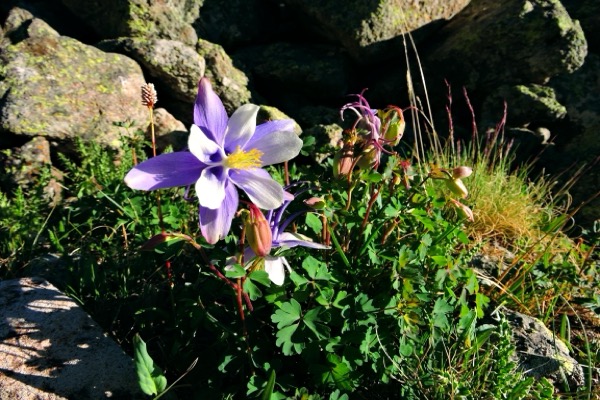
Colorado blue columbine (Aquilegia caerulea) — native. The state flower. Part shade and a bit more water than the rest of this list. It's your pick for the north side of the house or under a tree.
Yarrow (Achillea millefolium) — native species, many cultivars. 2–3 ft, full sun, very low water. Flat flower heads from late spring into fall, in white, yellow, pink, and red.
Purple prairie clover (Dalea purpurea) — native. Purple thimble flowers in midsummer that bees mob, and it fixes nitrogen in lean soil. Plant profile.
Catmint (Nepeta) — adapted. 2–3 ft, sun to part shade, low water. Purple-blue flowers for months; shear it after the first flush for a second round. Deer and rabbits mostly skip it.
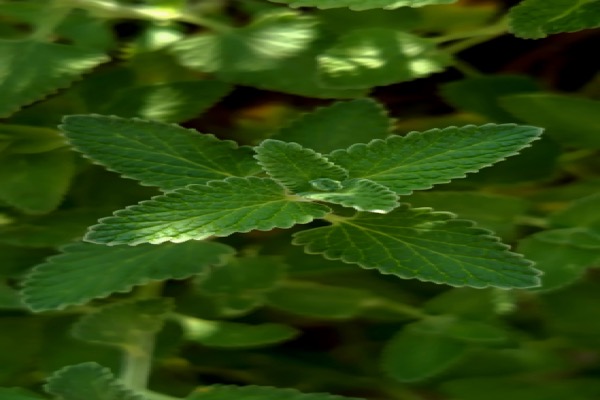
Salvia (Salvia nemorosa) — adapted. 18–30 in, violet spikes in early summer and again after a cut-back. A reliable pollinator plant.
Groundcovers and edging
Groundcovers fill space, shade the soil, and keep weeds down between the bigger plants.
Pussytoes (Antennaria) — native. A few inches tall, silver mats, fuzzy white flowers in spring. Good for slopes and between stepping stones.
Creeping mahonia (Mahonia repens) — native. Evergreen holly-like leaves that turn purple in winter, yellow spring flowers. Handles dry shade. Plant profile.
Sedum (stonecrop) — mostly adapted. Succulent, very low water, great in rock gardens and between pavers.
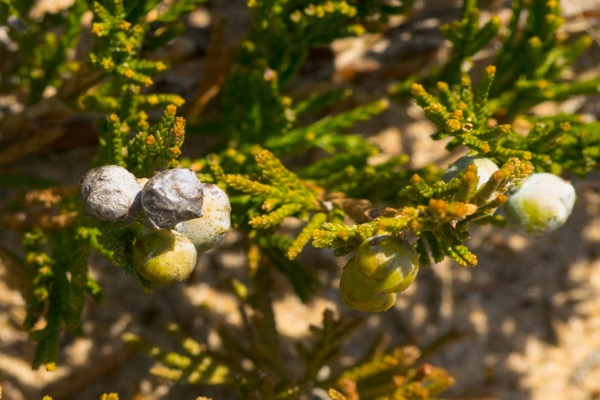
Creeping juniper (Juniperus horizontalis) — adapted. Low evergreen that spreads 4–6 ft. Useful on slopes for erosion control and as a backdrop for flowering perennials.
Match plants to your conditions
| Condition | Good picks |
|---|---|
| Full sun (6+ hours) | Rabbitbrush, sideoats grama, blue grama, blanket flower, yarrow, sulphur flower, sedum |
| Part sun (3–6 hours) | Serviceberry, wax currant, catmint, salvia, columbine |
| Dry shade | Creeping mahonia, Boulder raspberry, columbine (with a little extra water) |
| Dry slopes and poor soil | Big sagebrush, Gambel oak, fernbush, three-leaf sumac, pussytoes, creeping juniper |
| Heavy clay | Serviceberry, chokecherry, showy milkweed, catmint, salvia |
| Street-side strips | See our hellstrip guide — heat, salt, and foot traffic change the list |
Deep shade is the one place most xeric plants struggle. There, plan a different kind of water-wise bed rather than forcing sun plants to cope.
Plan for all four seasons
| Season | What carries the yard |
|---|---|
| Spring (April–May) | Serviceberry flowers, columbine, penstemon, early salvia, pussytoes |
| Summer (June–August) | Blanket flower, catmint, yarrow, milkweed, purple prairie clover, grasses in full growth |
| Fall (September–October) | Rabbitbrush, Gambel oak and sumac color, little bluestem turning red, grass seed heads |
| Winter (November–March) | Pinyon pine, creeping juniper and mahonia, grass seed heads, bare shrub branches |
If your beds are bare brown from October to March, add evergreens and more grasses.
Five plant mistakes we fix most often
- Desert plants that can't take the cold. Stick to plants proven at Denver's elevation and winter lows.
- Planting too close. It looks thin in year one and overcrowded by year four. Plant for mature size.
- Ignoring sun and shade. A sun lover in shade slowly declines. Map your sun hours before you shop.
- Assuming native means no water. New plantings need regular water for the first one to two seasons while the roots go deep. After that, most need little. See our full list of xeriscaping mistakes.
- Fertilizing. Most of these evolved on lean soil. Fertilizer makes them floppy and thirstier.
Frequently asked questions
Do I need to amend Denver clay for native plants? Less than you'd think. Many natives do fine in clay once it drains. Loosening the soil and adding modest compost to planting holes helps; heavy amendment is usually unnecessary.
Which plants bring the most pollinators? Showy milkweed, purple prairie clover, blanket flower, rabbitbrush, penstemon, catmint, and salvia.
Which are the most deer-resistant? Catmint, yarrow, salvia, sagebrush, and fernbush get browsed the least. Serviceberry and chokecherry get nibbled but recover.
Where should I buy natives? Local native and xeric nurseries beat big-box stores for selection. Plant Select is a good way to find proven plants for the region, and CSU Extension's Xeriscaping: Retrofit Your Yard is a solid free reference.
Want more plant ideas?
- Going all in? Read so you want to go full xeric.
- Want to swap out common nursery plants? Use our native alternatives swap list.
- Need a tree? Start with 14 tough trees for Denver.
- Want to see a big native planting? Look at the Congress Park native garden.
Ready to plant?
We design and install native plantings across Denver and nearby cities. Request an estimate and we'll walk your site, map sun and soil, and put together a plant list that fits your yard.