

How to Choose a Xeriscape Contractor in Denver: Questions, Red Flags, and What a Good Proposal Includes
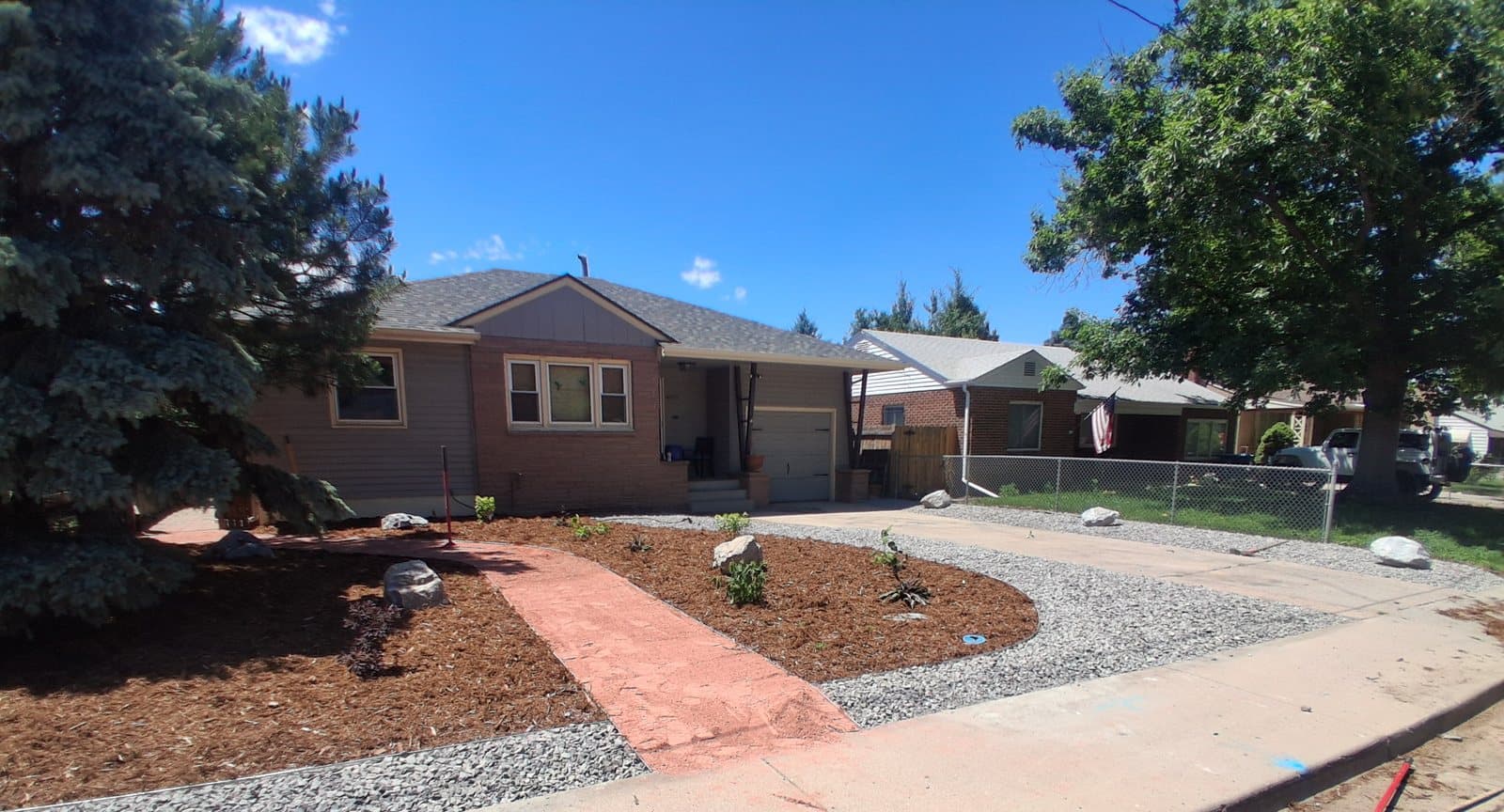
Plenty of Denver landscaping companies will say yes to a xeriscape job. Fewer know how to build one that still looks good in year three. For decades the default install here was sod and spray heads, and a lot of crews still work from that playbook — they swap the grass for rock, drop in whatever the nursery had that week, and leave the old spray zones running.
This guide is about telling the difference before you sign. It covers the questions to ask, the red flags that show up in bids, and what a good proposal should include. We're a xeriscape contractor ourselves — here's our xeriscape installation service — but the checklist below works no matter who you hire.
Why Xeriscape Needs a Contractor Who Knows Denver
Denver sits at 5,280 feet in a semi-arid climate. What that means for a landscape:
- Intense UV. Plants that look fine at sea level cook here, especially on south- and west-facing exposures.
- Big temperature swings. Spring and fall can swing 40°F or more in a day, which hits shallow-rooted and newly planted material hard.
- Cold winters. Most of the metro is USDA Zone 6a on the 2023 map, with winter lows of -10°F to -5°F; some urban pockets are 6b and higher foothill-edge areas 5b (USDA). Plenty of "drought-tolerant" plants from the Southwest won't survive that.
- Alkaline clay soil. It drains slowly, compacts easily, and makes overwatering the most common way new xeriscapes fail.
- Water rules. Denver Water is in a Stage 1 drought: from October 1, 2026, watering grass and spray irrigation are prohibited, while plants can still be watered by hand or with drip (Denver Water). A new landscape needs to be built for that.
A contractor who designs for these conditions — Colorado native plants, drip instead of spray, beds zoned by water need — builds something that gets better as it establishes. One who doesn't builds something you'll be paying to fix.
Questions to Ask a Xeriscape Contractor
"Can I see Denver projects a year or two after install?"
Day-one photos show fresh mulch and plants in nursery pots. What you want to see is how the work looks after a full season or two on the Front Range — whether it filled in, whether it held up through winter. Ask for local projects, not work from other climates.
"Why did you pick these plants?"
Any contractor can install what the nursery has in stock. The good ones can tell you why each plant is on the list — sun, soil, water, cold hardiness — and what it'll look like in year one versus year three. If the answer to "why this plant?" is "it looks good," keep looking.
"How will the irrigation work?"
Ask how they'll handle drip layout, how beds will be zoned by water need, and what happens to your existing spray zones. Overwatering kills more new xeriscapes in Denver than underwatering does, especially on clay. If there's no irrigation plan in the bid, that's a problem.
"Who's actually doing the work?"
Find out who shows up — the company's own crew, subcontractors, or a mix — and who your point of contact is during the install.
"What happens if a plant dies?"
Ask what their plant guarantee covers, for how long, and what it requires of you (usually following the establishment watering plan). Get it in writing.
"Which rebate programs apply to me?"
A contractor who works the metro should know which water provider serves your address and what that provider offers. They should also be straight with you about how those programs work. In 2026, Denver Water and Resource Central offered up to $750 off Resource Central's own turf-removal service — it's done by Resource Central's crews, not a contractor you hire, and the 2026 discounts are fully allocated (Denver Water). Aurora Water's GRIP program works differently: it pays residential customers $3/sq ft for a traditional water-wise landscape, but Aurora must approve the project before installation (Aurora Water).
"Do you work with HOAs?"
If you're in an HOA, ask how they handle architectural review submittals. Colorado law (C.R.S. 38-33.3-106.5) bars HOAs from prohibiting xeriscape or drought-tolerant landscaping on your lot, but the HOA can still set reasonable design guidelines and may limit artificial turf to back yards (C.R.S. 38-33.3-106.5). A good contractor designs to those guidelines so approval is easy. More in our HOA landscaping guide.
Red Flags in a Denver Xeriscape Bid
- A single-line price. "Front yard xeriscape — $9,000" tells you nothing. You can't compare it, and you can't hold anyone to it.
- No irrigation plan. Rock and plants dropped onto old spray zones is how you get dead plants and a still-high water bill.
- A plant list that's mostly thirsty or tender species. Or no plant list at all — just "perennials" and "shrubs."
- "No maintenance, ever." Established xeriscape is low-maintenance, not no-maintenance. Someone promising zero upkeep is selling, not designing.
- Promising to handle your Denver Water rebate. Resource Central's turf-removal program uses its own crews. A contractor can't file it for you.
- Pitching turf where it isn't allowed. Under Colorado's SB24-005, from January 1, 2026, local governments can't allow new nonfunctional turf or artificial turf on commercial property, HOA common areas, medians, or rights-of-way (SB24-005). If a bid for your HOA's common area includes decorative sod or artificial turf, ask how that squares with the law.
- Pressure to sign today. A real estimate holds up for a reasonable window.
What a Good Xeriscape Proposal Includes
A proposal you can actually compare and hold a contractor to should spell out:
- Scope and square footage — which areas are included, and roughly how many square feet each
- Demo and haul-away — sod removal, old plants, debris, and how it leaves the site
- Grading and soil prep — including any amendment
- A plant list — species, container sizes, and quantities
- Materials — rock type, size, and depth; mulch; edging; weed barrier (if any); boulders
- Irrigation — drip layout, zones, controller, and what happens to existing spray heads
- Hardscape — patio or path material, square footage, and base prep
- Line-item pricing tied to each piece above
- Schedule — expected start window and install duration
- Payment terms — deposit, progress payments, final payment
- Plant guarantee terms and establishment watering instructions
- Exclusions — what's not included (permits, HOA fees, fence work, lighting)
If you want the design side broken out — what a plan should show and what it costs — see our guide to landscape design in Denver.
What Xeriscape Costs in Denver
Our published starting rates: planted xeriscape (rock, plants, shrubs, a tree or two) from $6/sq ft, most projects $6–10/sq ft; budget options like wildflower planting or arborist mulch from $4/sq ft; concrete and hardscape from $8/sq ft; artificial turf from $10/sq ft. The design fee is $500, credited toward the project on installs over $5,000. A 500 sq ft front yard at $6–10 runs about $3,000–5,000; 1,000 sq ft runs $6,000–10,000.
If two bids for the same scope are far apart, the line items usually tell you why. Our xeriscaping cost guide breaks down what drives the number, and our landscaping cost guide covers full yard makeovers.
Xeriscape costs more upfront than laying new sod. What you get back is lower water use and a lot less weekly upkeep — how fast that adds up depends on how much lawn you're replacing and what your water provider charges, so be skeptical of anyone quoting you a guaranteed payback period.
Frequently Asked Questions
What's the difference between a landscaper and a landscape designer?
A landscaper installs and maintains. A designer creates the plan — plant selection, layout, irrigation, hardscape. Many xeriscape companies do both. For significant projects, one company that designs and installs is usually more efficient than hiring the two roles separately.
Do all Denver landscaping companies do xeriscape?
Many offer it; fewer specialize in it. Ask directly how much of their current work is xeriscape versus sod and spray, and ask to see it.
How long does a xeriscape project take?
A front yard typically takes 3–7 days of active installation once work starts. Backyards with significant hardscape can run 2–4 weeks. The bigger variable is scheduling — spring and fall book up, so plan ahead.
Can I keep some grass?
Yes. Partial conversions work well when you want a small lawn for kids or dogs. The key is putting turf and xeriscape beds on separate irrigation zones — they need very different watering.
When is the best time to start?
Spring (April–June) and fall (August–October) are the best planting windows on the Front Range. Fall is often better for establishing perennials and natives. See our guide to timing a Denver xeriscape project.
Ready to Get a Xeriscape Estimate?
We design and install native-plant landscapes across Denver and the surrounding metro, and we'll tell you if xeriscape isn't the right fit for part of your yard. Request an estimate and we'll walk the property and put it all in writing.