

Xeriscape and Artificial Turf Together: The Low-Maintenance Denver Yard That Actually Makes Sense
Most Denver homeowners think xeriscape and artificial turf are two different philosophies — that you pick one and rule out the other. Native plants or fake grass. Ecological value or functional surface. The assumption is that they're opposites.
They're not. And that assumption is costing homeowners a yard that could actually work for them.
The smarter framing: xeriscape and artificial turf solve different problems. When you understand what each material does well — and what it can't do — the design logic gets simple. Use both. Put each one where it belongs. Build a yard that handles real life in Denver without demanding your weekends or running your water bill up every summer.
That's what a hybrid yard looks like. Here's how it works.
40–50%
Water reduction vs. a traditional bluegrass lawn
0 gal
Used by artificial turf zones after installation
2
Service lines — xeriscape design and turf installation — combined in every Xeris hybrid project
The Logic: Use Zones, Not Labels.
Zone-based thinking is how landscape designers actually work — and it's the key to making xeriscape and artificial turf live together without conflict.
Every yard has zones that perform different functions. The area where your kids kick a ball around, where the dog sprints the perimeter, where you host a cookout — that's an activity zone. It gets heavy, unpredictable use. It needs a surface that absorbs impact, stays clean, and performs the same in March as it does in August. Artificial turf is built exactly for that.
The rest of the yard — the borders, the beds, the front-yard street presence, the screening along the fence line — doesn't get that kind of use. It's where you want visual depth, seasonal change, pollinator habitat, cooling shade. That's where native plants and xeriscape work best.
When you stop asking "turf or xeriscape?" and start asking "what does this zone need to do?" — the design writes itself. Activity zones get turf. Everything else gets xeriscape. Each material does what it's actually good at. Neither is asked to do a job it was never built for.
What Each One Brings to the Yard
What Xeriscape Brings
-
✓
Pollinator support — Native plants support bees, butterflies, and hummingbirds. Turf is inert — it supports nothing.
-
✓
Near-zero water use after establishment — Established native plants run almost entirely on Denver's natural rainfall — about 14 inches a year. No irrigation needed after year two.
-
✓
Cooling effect — Native plants transpire. They cool the surrounding air. A turf surface can hit 150°F in direct sun — a xeriscape border stays 30–40 degrees cooler.
-
✓
Living soil biology — Native roots improve soil structure, support microbial life, and increase infiltration over time. Artificial turf sits on top of the ground — it doesn't interact with it.
What Artificial Turf Brings
-
✓
Year-round usability — A turf surface performs the same in April mud season as it does in August. No dormancy, no dead patches, no waiting for the ground to firm up.
-
✓
Pet and kid friendly — Heavy daily use — dogs running circuits, kids playing on it — leaves no damage. No worn tracks, no urine spots, no brown zones.
-
✓
Zero ongoing maintenance — No mowing, no fertilizing, no overseeding, no irrigation. The turf zone requires nothing from you after installation.
-
✓
15+ year lifespan — Quality turf products with proper installation last 15–20 years. The cost amortizes over time while the maintenance bill stays at zero.
Design Patterns We See Work.
These aren't theoretical. These are the combinations that actually deliver a low-maintenance, functional Denver yard.
The Activity-First Backyard
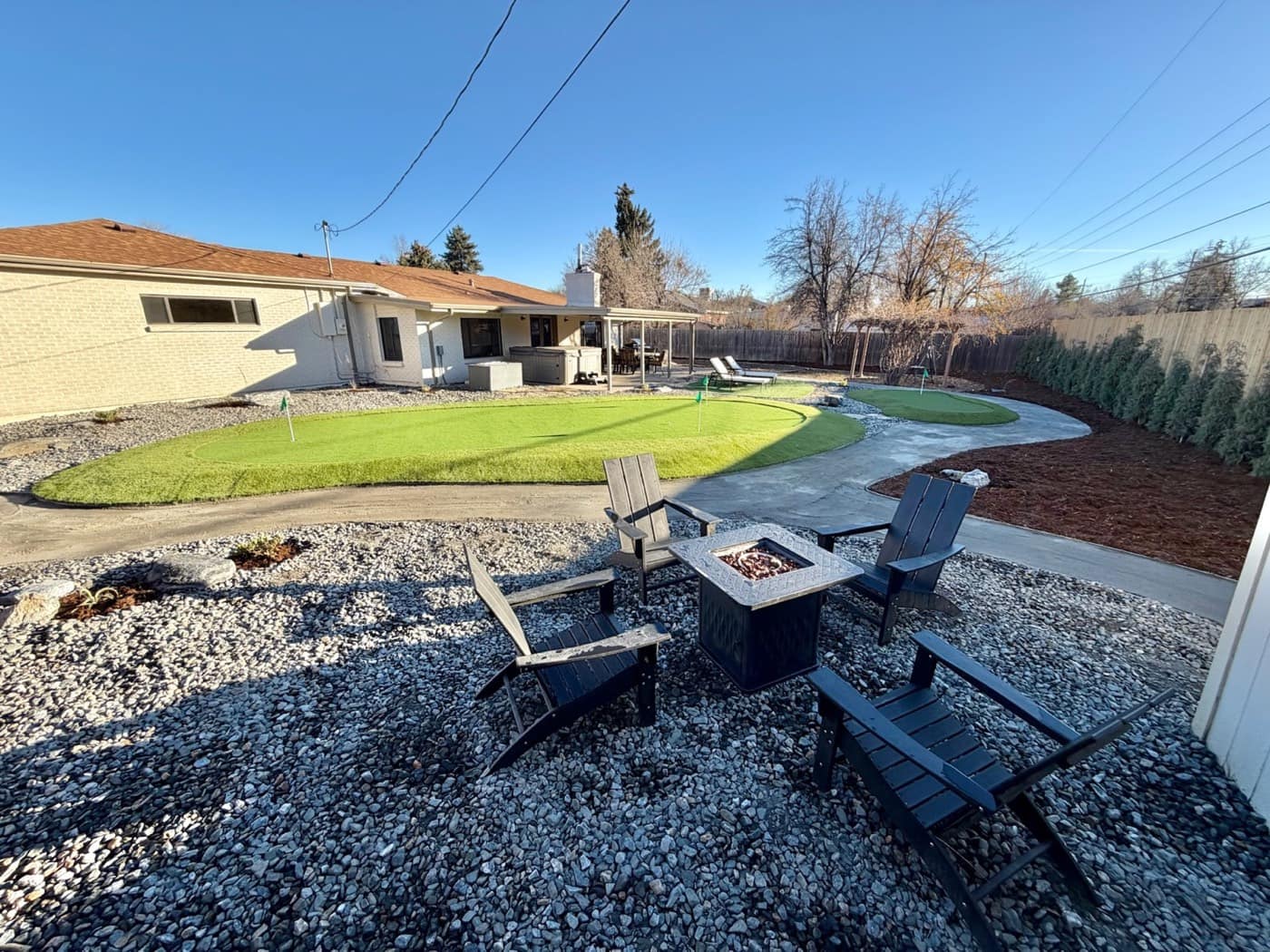
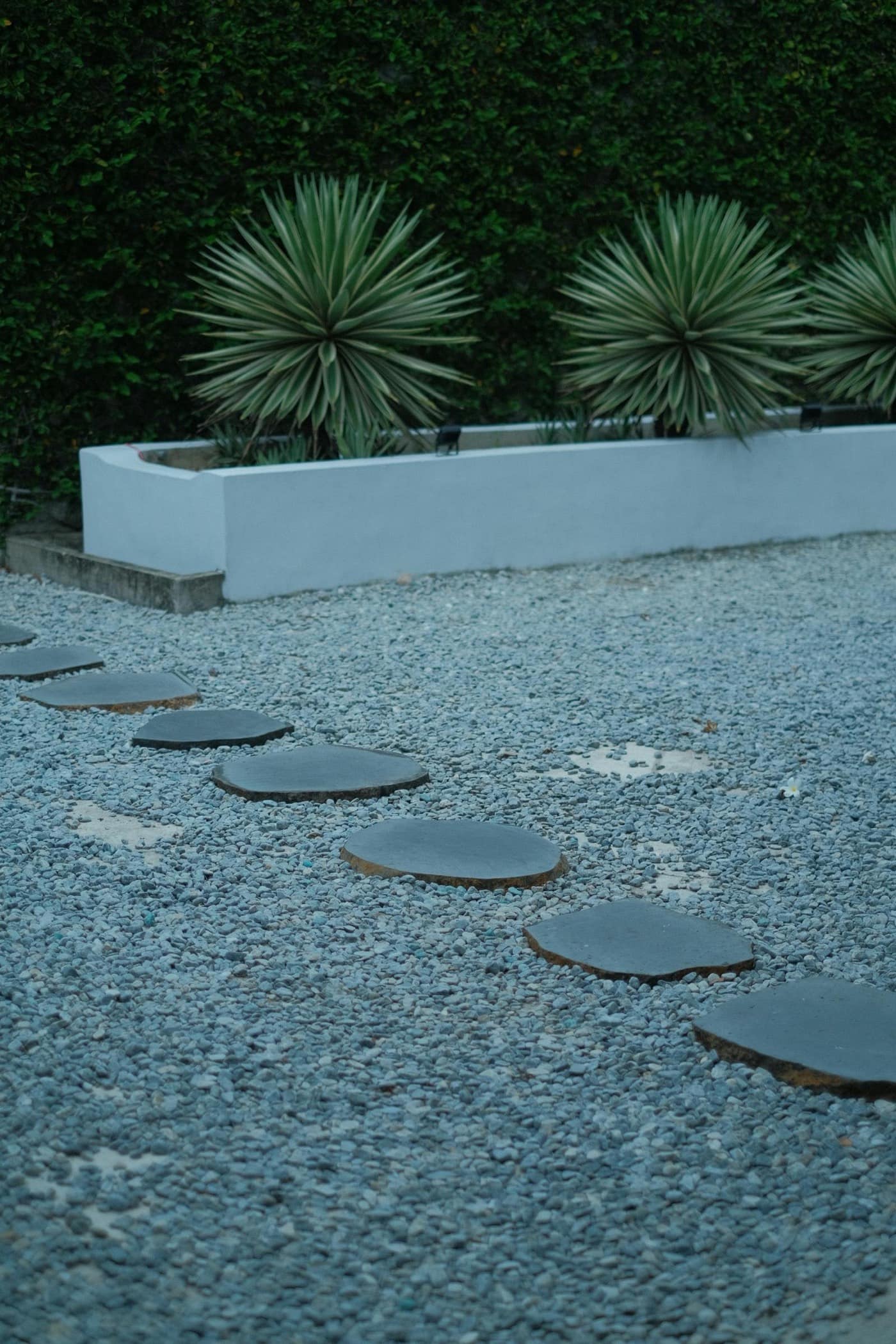
A 600–800 sq ft artificial turf zone in the center back — the functional heart of the yard where kids play and the dog runs. Decomposed granite paths frame the edges and connect to the patio. Native plant borders along the fence line provide privacy and seasonal color. The turf handles all the use. The xeriscape handles all the visual interest. Neither has to do double duty.
The Putting Green + Native Perimeter
A custom putting green (shaped, contoured, with multiple hole positions) in one corner of the backyard. Penstemon, blue grama, and rabbitbrush filling the surrounding borders. The putting green gets used constantly — it's the reason people go outside. The native planting makes the yard look like Colorado instead of a sports facility. One yard, two personalities.
Front Xeriscape, Back Turf
One of the cleanest approaches for families. The front yard converts fully to xeriscape — native plants, decomposed granite, street-facing curb appeal that looks designed and intentional. The back stays functional with a turf zone for heavy use. You capture the water rebate on the front and the functional performance on the back. Both sides win.
The Hybrid Edge
A smaller turf zone — 300–400 sq ft — along the back patio, transitioning into planted xeriscape beds that carry to the fence. No hard division between the two, just a natural material shift. Clean, modern, and easier to maintain than either material alone across the full yard.
The Water Math — Why It Compounds
A standard bluegrass lawn in Denver uses 30,000–50,000 gallons per year depending on size. A hybrid yard — artificial turf in the activity zone, established native xeriscape everywhere else — uses roughly 40–50% less than that. The savings compound because both materials are pulling in the same direction.
The turf zone uses zero water after installation. The xeriscape zones use almost zero after the establishment period — typically two growing seasons. Once both are in, your outdoor water footprint drops to near nothing except a drip line running on a long interval through the planted beds. Denver Water rebate programs apply to any converted turf area, so the front-yard xeriscape conversion may qualify for a rebate that offsets part of the overall project cost. For a full breakdown of what a xeriscape project runs in Denver, see our complete xeriscape cost guide.
It's also worth naming what the water math doesn't account for: the value of not watering. The time. The mental load of managing an irrigation system through Denver's wildly variable spring and summer. A hybrid yard that's properly set up runs itself.
How Xeris Approaches Hybrid Design
We design both. We install both. And we think about the yard as a single system — not as a turf project with some plants added, or a xeriscape project where turf got bolted on at the end.
That matters because the integration decisions are where most hybrid yards succeed or fail. Where the turf edge meets the decomposed granite path. How the native border is sized relative to the turf zone. Which drip zones are set on which schedule. How the design reads from the house, from the street, from inside the turf zone itself. These are design calls, not product calls — and getting them right requires someone who works across both materials.
For a deeper look at what we install on the turf side, see our full artificial turf Denver guide — it covers materials, PFAS certifications, infill options, and what to ask any installer before you sign. And for the xeriscape side, our native plants Denver xeriscape guide covers the specific plants that perform best in Front Range conditions, with notes on sun, drainage, and mature size.
Both articles together give you the full picture of what goes into a hybrid yard that actually holds up.
Design a Yard That Works for Your Life
You don't have to choose between a yard that looks good and a yard that actually gets used. Xeris designs hybrid landscapes across Denver and the Front Range — xeriscape and artificial turf together, built as a single system.
Xeris does this work. See our Artificial Turf Installation service in Denver — what's included, what it costs, and how to get a free walkthrough of your property.