

Denver Is Starting to Look Like Denver Again
Something happened over the last few years that doesn't get talked about much, because it's quiet and doesn't have an obvious villain or a deadline.
People started planting things that belong where they live.
Not everywhere. Not all at once. But in Denver, you can see it if you're paying attention — the front yards that used to be bluegrass and edging and a sprinkler system running in the rain are turning into something else. Something that moves differently in the wind. That blooms in colors that look like they were picked from the hillsides above Morrison or the prairies east of town.
Pasque flowers in March. Blue grama grass through summer. Rabbitbrush turning gold in September. These aren't exotic. They're what was always here. Putting them back is most of what our xeriscape installation crews do.
Something Is Shifting
It's not just Denver. Across Europe, cities have been converting their formal gardens and roadsides to native wildflower meadows for years now. In the UK, "No Mow May" started as a fringe idea and became a national movement. In the Netherlands, cities are rewilding their river edges and watching birds and insects come back. Monarch butterfly corridors are being mapped and planted across the central United States — a kind of distributed infrastructure built one yard and one rooftop at a time.
None of this is organized into a single movement with a logo and a conference. It's more like a collective remembering — a lot of people in a lot of places arriving at the same conclusion at roughly the same time: that the version of beauty we inherited (flat, green, uniform, controlled) doesn't actually feel like beauty anymore. That inheritance has a history, and it's worth knowing — we traced it in the history of the American lawn.
What people are reaching for looks more like where they actually are.
What Denver Looks Like When It Looks Like Itself
Colorado has one of the most ecologically rich native landscapes in the country. The Front Range sits at the meeting point of the Great Plains and the Rocky Mountains — which means the ecology here is unusually layered. Shortgrass prairie species, mountain species, and high-desert species all converge within a few hours of Denver. It's not a monotonous landscape. It's a transition zone, and transition zones are where the most interesting life tends to happen.
Blue grama and buffalo grass were the ground cover before lawns arrived. Penstemon, yarrow, blanket flower, and rabbitbrush were the color. Gambel oak, serviceberry, and cottonwood lined the drainages and creek banks. These weren't incidental — they were a functioning system, built over thousands of years of co-evolution with the soil, the rainfall, the insects, and the animals that depended on all of it.
The hummingbirds know where the penstemon is. The monarch butterflies follow the milkweed. The solitary ground-nesting bees — most people never notice them — live in undisturbed soil beneath the ornamental grasses, doing a lot of the pollination work that honeybees get credit for.
When a yard in Denver gets planted with these things instead of a sod lawn and a row of junipers, it doesn't look like a garden. It looks like Colorado. And the wildlife responds fast, because this is the landscape they evolved alongside — and they recognize it.
The Yard as Ecosystem
A single front yard isn't a prairie. But it's not nothing, either.
Native plantings create corridors — patches of habitat that connect to other patches. A neighborhood with ten or twenty xeriscaped yards starts to function as a system. Pollinators can move through it. Birds can find food and cover across a wider range. The soil stays more stable because native root systems run deep — some prairie species put down roots eight or ten feet — which anchors everything through drought and freeze cycles that shallow-rooted turf can't handle.
There's also the sensory dimension that's harder to quantify. A yard planted with native species changes through the year in a way that a lawn doesn't. It has a progression — early bulbs and pasque flowers in the cold, the bloom sequence through summer, the seed heads and bronze grasses in fall, the structural interest of rabbitbrush and dried coneflower through winter. It looks alive because it is alive, in a more complete way than managed turf ever manages.
That costs almost nothing to maintain once it's established — here's what it costs to install. Not because it's easy to design or install — it isn't — but because a plant that belongs where you live doesn't need help surviving the season. It's already adapted to the altitude, the hail, the late frosts, the forty-degree temperature swings. It just needs to be put in the right place.
Why We Do This Work
Xeris isn't a conservation organization. We're a landscaping company. We design and build xeriscapes across Denver, and we do it because people hire us to.
But we'd be lying if we said the work felt purely transactional.
When you spend a day planting native grasses and perennials in someone's front yard and you come back a year later and the blanket flowers have spread and there's a hummingbird working the penstemon — that means something. It's a small thing, measured against any larger scale. But small things are how landscapes get rebuilt, one yard at a time. That's always been true. The grasslands didn't appear all at once. They grew from individual plants, seeded by wind and birds, spreading into the spaces that were ready for them.
Denver is getting ready. You can see it in the yards and the parkways and the community gardens and the conversations people are having about what their outdoor space is actually for. We got to have one of those conversations on FOX31's Great Day Colorado. The bigger version of it is public land: Denver's medians and roadsides are still mostly turf, and we've written about what they could look like instead. The city is developing a different relationship with its own landscape — not a romantic one, but a practical and honest one. This is a dry, high, cold place with hard sun and about fifteen inches of annual rainfall. The plants that belong here are extraordinary. They just haven't always been the ones we chose.
Earth Day comes around once a year and asks people to think about the planet. We'd rather just plant things that belong here and let the ecosystem do what it's been doing for a long time.
That seems like enough.
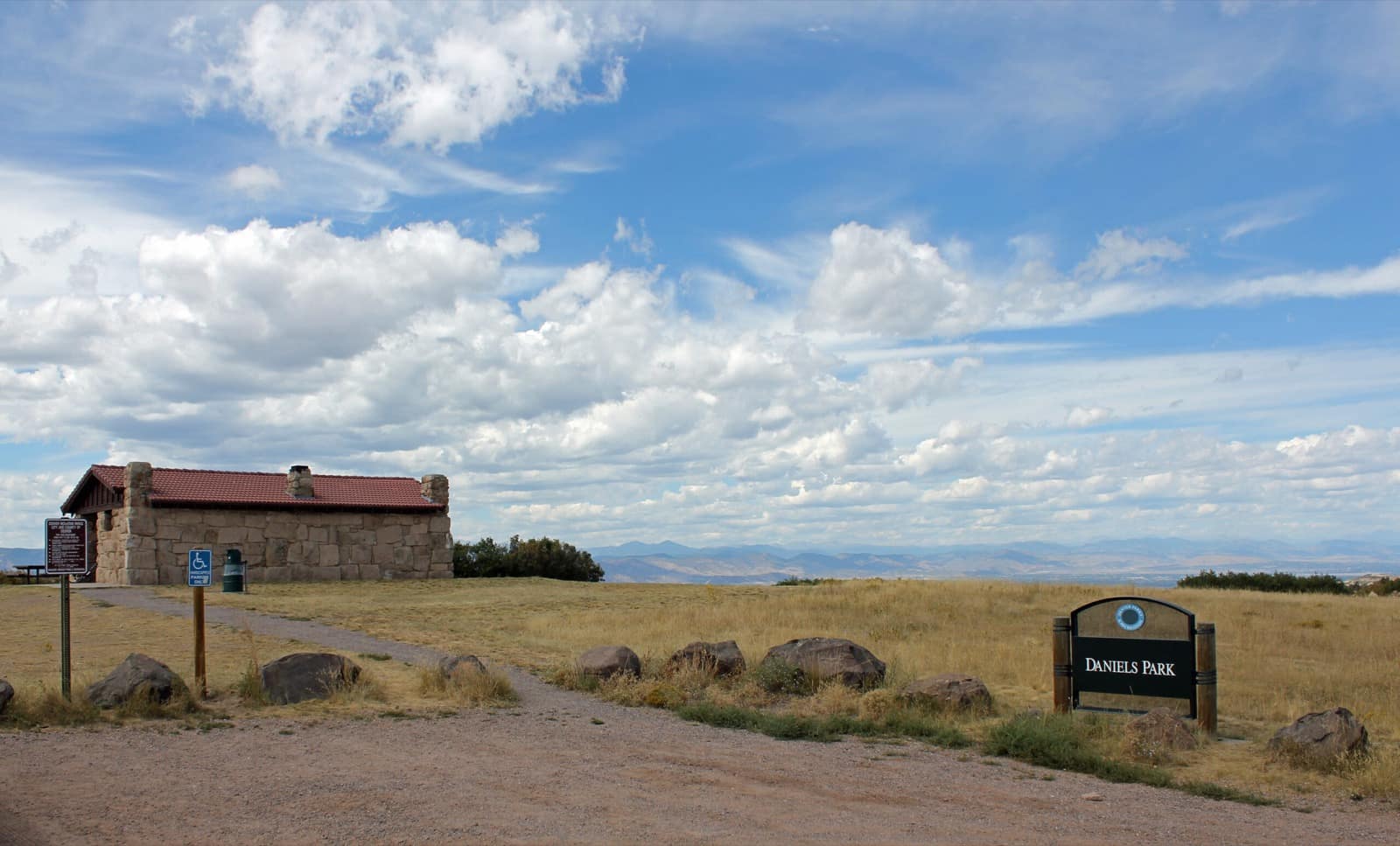
Featured image: Daniels Park, Douglas County, Colorado. Photo: Jeffrey Beall / CC BY-SA 3.0
Want to Start With Your Own Yard?
Xeris designs and installs native plant xeriscapes across Denver. Request an estimate and we'll walk your site, talk through what belongs there, and show you what it could look like.