

Our Cities Are Fighting Their Own Climate — And Losing
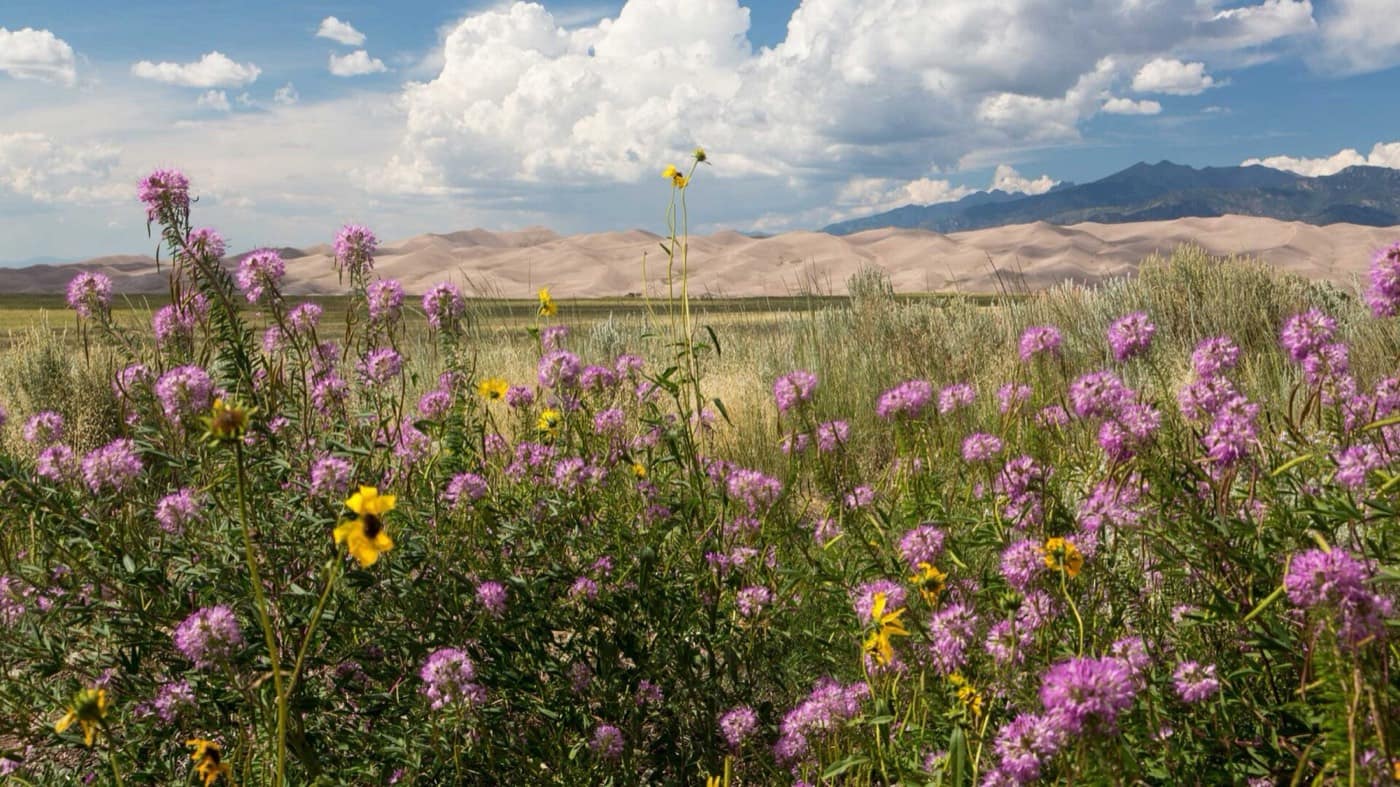
Drive any major road in Denver — Colfax, Federal, Sheridan, Wadsworth — and look at what's planted along the edges. Strips of struggling bluegrass baking in 95-degree July heat. Medians holding dead or semi-dead turf that hasn't seen meaningful rain in weeks. Roadsides that cost money to maintain, waste water to keep alive, and look defeated for most of the summer.
Now imagine those same corridors planted with what actually belongs here.
Upright blue penstemon in full purple bloom. Rabbitbrush going gold in September. Blue grama grass moving in the wind. Native plants that evolved in exactly this climate — needing no irrigation after establishment, no mowing crew, no fertilizer — alive and thriving because Colorado is their home, not a place they're trying to survive.
The plants exist. The research exists. The precedent exists. What's missing is the will to stop planting cities like they're somewhere else.
The Plant That Should Be Everywhere It Isn't
If you want to understand what municipal xeriscape could look like at scale, start with Penstemon virgatus — the upright blue penstemon, sometimes called wandbloom penstemon or upright blue beardtongue.
It grows natively in Colorado, Wyoming, New Mexico, and Arizona — right here, in our climate, in our soils. It reaches 20 to 60 centimeters tall on smooth, upright wand-like stems that hold clusters of two-lipped flowers in shades of white, pale lavender, and blue-purple, each petal veined with deep purple-red nectar guides that look hand-painted. In full bloom it's genuinely stunning — the kind of plant that makes people pull over.
It tolerates rocky and gravelly hillsides. It handles alkaline clay. It survives Front Range temperature swings that kill less-adapted plants. Once established, it needs no supplemental irrigation. It supports native bees, serves as a host plant for arachne and variable checkerspot butterflies, and spreads slowly to fill in over time. It thrives in conditions that destroy bluegrass.
It costs almost nothing to maintain once it's in the ground.
And it is planted on virtually none of Denver's roadsides.
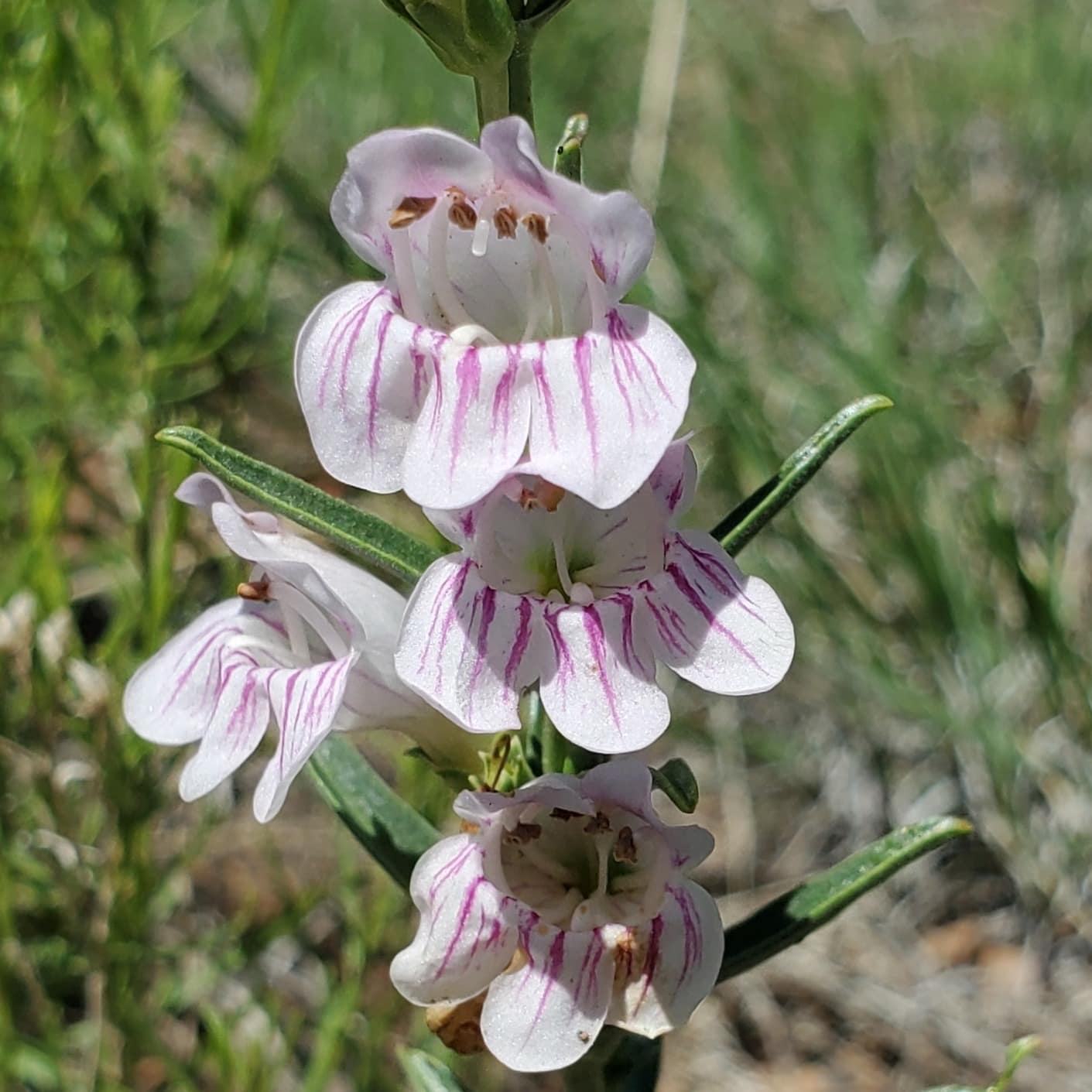
Penstemon virgatus in full bloom — native to Colorado's Front Range. Photo: Craig Martin, Wikimedia Commons (CC BY-SA).
The Denver Botanic Gardens has been documenting exactly this kind of plant potential for years — which plants from the Colorado Front Range and beyond can hold up in urban conditions, survive extreme heat, and support local ecosystems. Their research on finding flora fit for the Front Range and further and on whether green spaces can survive on less water is exactly the kind of science that should be informing what goes into every median and roadside in this region. The knowledge is there. The gap is in application.
What Cities Are Actually Spending to Fight Their Own Climate
Municipal landscaping budgets are substantial and largely invisible to residents. A single mile of maintained roadside turf requires:
- Irrigation infrastructure installation and ongoing maintenance
- Regular mowing — typically 8–15 times per season depending on rainfall
- Fertilizer and herbicide applications
- Replacement plantings when turf fails under heat or drought stress
- Water — enormous amounts of water, paid for at commercial utility rates
Colorado cities spend tens of millions of dollars annually maintaining landscapes that are architecturally unsuited to the climate they're in. That money comes from residents. And it buys something that looks marginal at best for five months of the year and brown for two more.
Native plant roadsides, once established, need virtually none of that. No mowing on the same schedule. No irrigation. No fertilizer. Plants that look their best precisely during the seasons when turf looks its worst — late summer, when native grasses are golden and penstemons are still blooming, rather than scorched and stressed.
California Already Figured This Out
California has been doing this at scale for years — not perfectly, not uniformly, but meaningfully. The contrast with Colorado is worth examining.
Caltrans — the California Department of Transportation — has an active native vegetation roadside management program that explicitly prioritizes native plants for rural and transitional highway roadsides. Their rationale is straightforward: native plants, once established, are self-sustaining on naturally occurring rainfall and soil nutrients. They out-compete weeds and annual grasses in harsh roadside conditions. They reduce maintenance costs over the long haul. And they improve roadside visual quality in a way that stressed imported turf never can.
In Los Angeles, the Department of Water and Power runs the Landscape Efficiency Assistance Program, providing no-cost yard makeovers for qualifying residents to replace water-hungry turf with drought-adapted plants. The city has made the economic case plainly: this is cheaper than delivering the water to keep traditional landscaping alive in a desert climate.
California's Assembly Bill 1572 goes further — phasing out ornamental turf irrigation in non-residential spaces starting in 2027. That means public medians, commercial properties, institutional grounds. The ornamental bluegrass median along a California state highway is becoming a legal relic.
And Governor Newsom's California Water Plan 2028 explicitly targets landscape efficiency as a key component of the state's long-term water supply strategy. Native plants on public land aren't a design preference in California — they're water infrastructure.
Colorado has drought too. Colorado has water stress too. The difference, for now, is the policy response.
What Colorado Cities Could Do — and Mostly Haven't
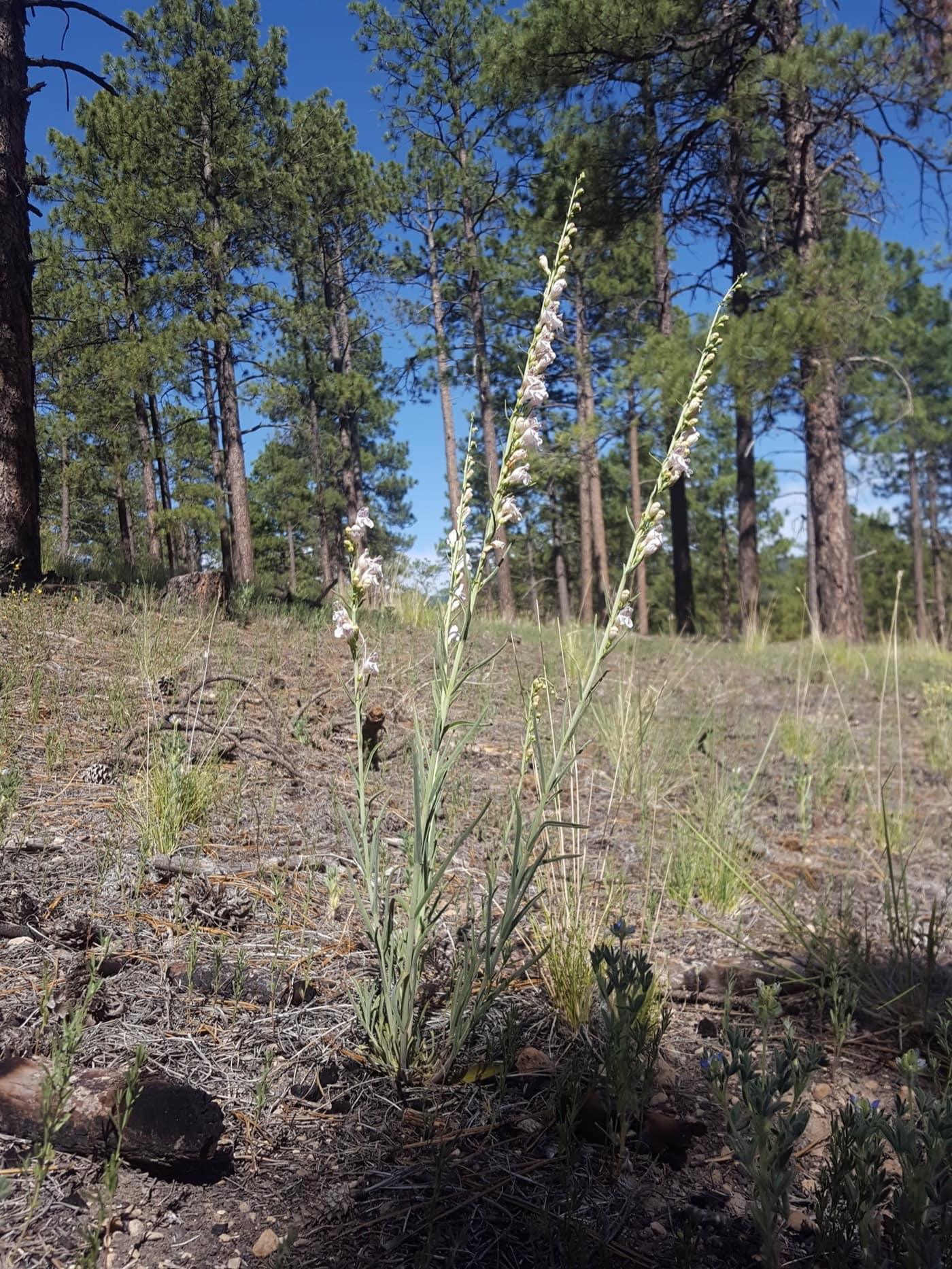
Penstemon virgatus in its natural Colorado habitat — zero irrigation, no maintenance, thriving in poor gravelly soil. Photo: Wikimedia Commons (CC BY-SA).
To be fair, Colorado isn't doing nothing. Denver Water's ColoradoScaping program funds residential turf replacement. The Colorado Water Conservation Board launched a Turf Replacement Grant Program for municipalities, though that funding was exhausted by early 2025. Aurora Water's GRIP program pays $3 per square foot for commercial and large-scale conversions. Castle Rock pays $3.25. These are real programs doing real work.
But they're aimed primarily at private property. The public landscape — the medians, the roadsides, the parkway strips, the acres of grass that ring every government building, every school, every park boundary — remains largely planted as if water were abundant and maintenance were free.
Denver's streets could look like Colorado. They could be planted with the plants that evolved to live here: blue grama grass, Apache plume, rabbitbrush, four-wing saltbush, and penstemons — Penstemon virgatus, Penstemon strictus, Penstemon secundiflorus — in masses along every corridor, blooming in sequence from May through October, alive through drought without a drop of supplemental water.
That's not a fantasy. It's what happens when you plant the right plants.
The Objections — and Why They Don't Hold Up
There are standard objections to native plant roadsides. They deserve direct answers.
"Native plantings look weedy or unkempt."
This is a design failure, not a plant failure. Mass plantings of native species with defined edges, clear structure, and seasonal interest look deliberate and beautiful. What looks unkempt is the halfway measure — isolated native plants dropped into a context of dead turf with no design logic. When you see a highway median blanketed in penstemon and blue grama in July, it doesn't read as neglect. It reads as intention.
"The establishment period is too difficult."
Caltrans allows 3–5 years for full establishment on highway roadsides. That's a real timeline, and it requires investment in site preparation, weed control during establishment, and patience. But it's a one-time investment. The alternative — ongoing irrigation, mowing, and fertilizer for the lifetime of the road — never ends. The math isn't close.
"Residents won't accept the change."
Residents accept plenty of things they didn't choose. They accept the smell of fertilizer applied to medians in June. They accept brown turf in August. They accept water bills that reflect the cost of keeping public grass alive in a semi-arid climate. What most people actually object to isn't native plants — it's poorly executed transitions that look like someone gave up. A well-designed native roadside, given time to establish, tends to become a point of local pride.
The Bigger Picture: Cities as Ecosystems
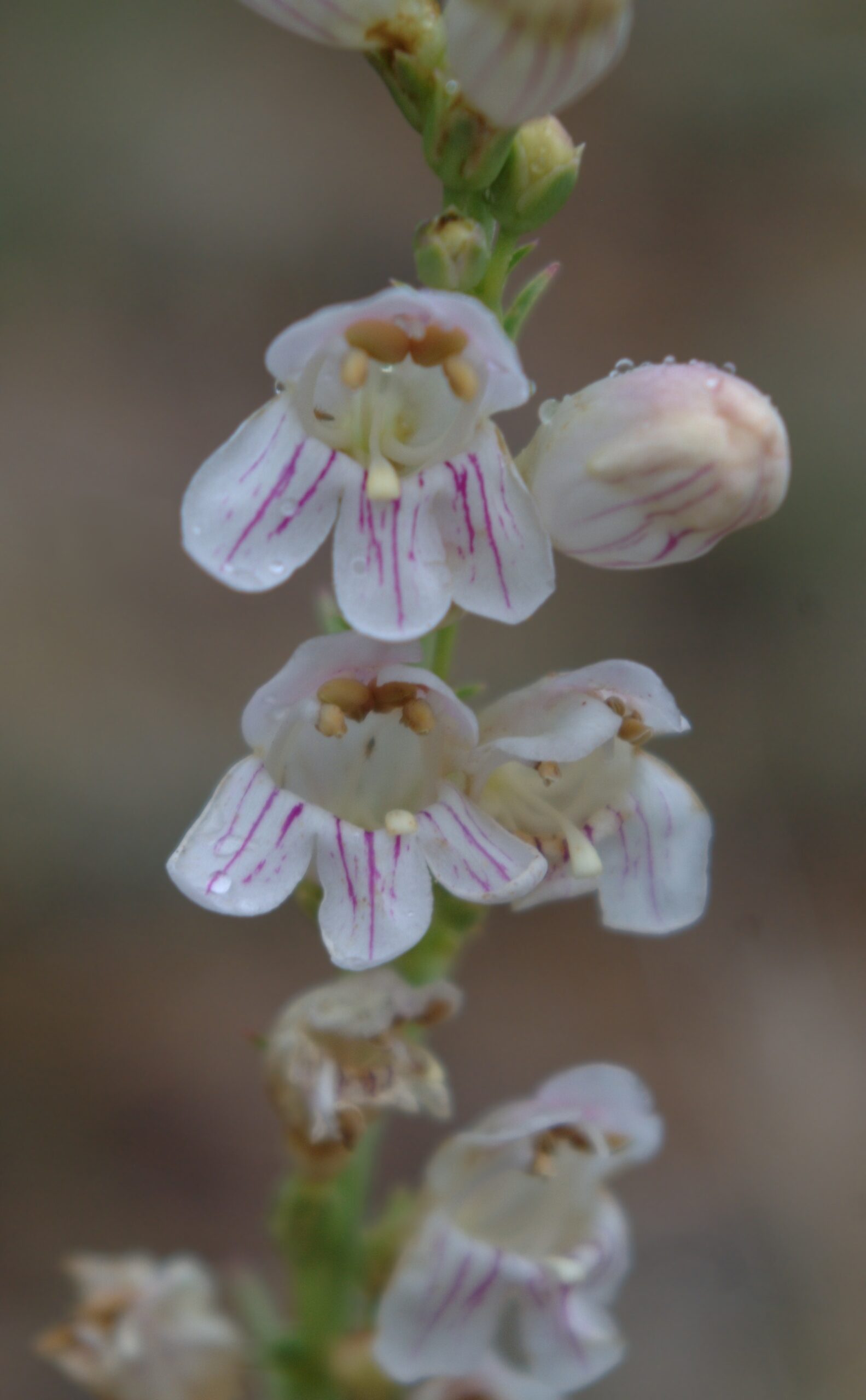
The intricate blooms of Penstemon virgatus — a native that supports solitary bees and checkerspot butterflies while surviving on rainfall alone. Photo: Wikimedia Commons (CC BY-SA).
The Denver Botanic Gardens research on green spaces surviving on less water points to something larger than aesthetics or even water conservation. Urban landscapes are ecosystems — or they could be. Right now most of Denver's public green space is ecological dead weight: monoculture turf that supports almost no insect life, sequesters minimal carbon, contributes to urban heat island effects, and requires continuous resource inputs just to survive.
Native plant corridors along Denver's roads would be something different. Continuous habitat for pollinators. Shelter and food for birds. Plants whose root systems hold soil and slow stormwater runoff far more effectively than shallow-rooted turf. A connected network of green infrastructure that actually functions as part of the local ecosystem rather than fighting it.
The scale matters. Miles of roadside plantings, if converted to native species, represent a meaningful shift in how Denver interacts with its own watershed, its own climate, and its own ecology. Not a complete solution to any single problem — but a meaningful contribution to many of them, at a lower cost than what we're doing now.
What This Means for Your Property
Municipalities move slowly. Cities change their landscaping standards on decade-long timescales, if they change them at all. But individual homeowners don't have to wait.
The same logic that makes native plant roadsides compelling at municipal scale applies at residential scale — probably more so. Your front yard, your parkway strip, your backyard: these are opportunities to build the kind of landscape that California's cities are now mandating, that Colorado's Botanic Gardens researchers are advocating for, that the data consistently supports.
Penstemon virgatus grows beautifully in residential xeriscape. So does rabbitbrush, and blue grama, and Apache plume, and the dozens of other native and drought-adapted plants that belong here. They don't need irrigation. They don't need weekly maintenance. They get more interesting every year as they establish.
The city outside your fence may still be planting bluegrass. You don't have to.
Want a Yard That Works With Colorado's Climate?
Xeris builds xeriscape landscapes across Denver that look like they belong here — native plants, low water, designed for the Front Range. Request an estimate and we'll walk your property.