

HOA Landscaping in Denver: Why You Need a Xeriscape Specialist, Not a Generic Maintenance Company
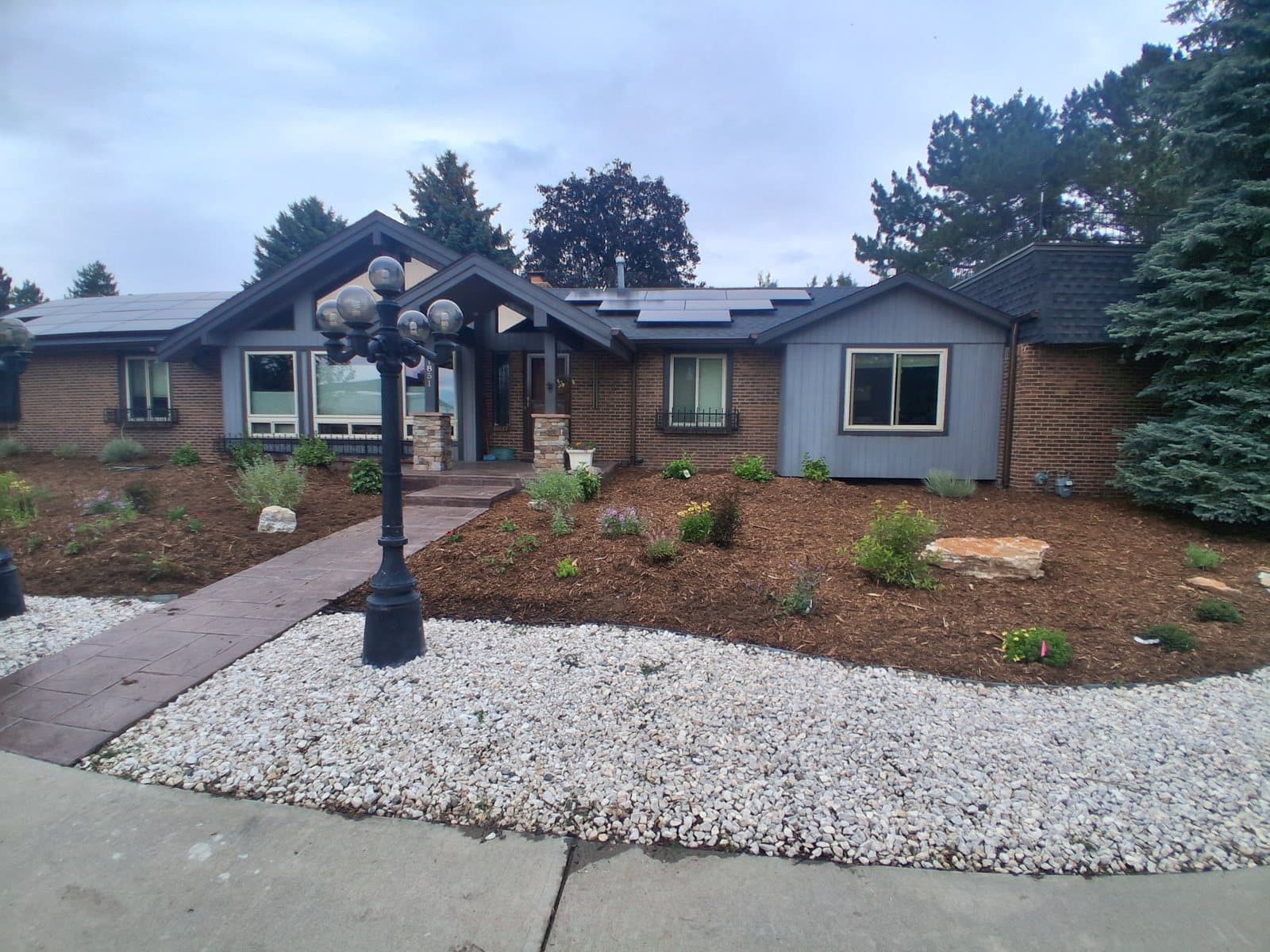
Most HOAs in the Denver metro are overpaying for landscaping that looks mediocre at best and dead at worst — and the reason is almost always the same: they hired a general maintenance company instead of one that knows how to grow things in Colorado.
Generic landscape maintenance companies are good at one thing — showing up on schedule. Weekly mowing. Seasonal blowing. Irrigation that runs whether it rained yesterday or not. They optimize for labor hours and route efficiency, not for the performance of the plants they're supposed to be tending. In a climate like Denver's, that's the wrong model.
This is an argument for HOAs to think differently about who they hire — and what they're actually buying when they sign a landscaping contract.
What Generic Landscape Companies Optimize For (It's Not Your Plants)
A standard commercial landscape maintenance contract is built around labor time, not outcomes. The company books routes. They send a crew. They mow what needs mowing, blow what needs blowing, and leave. Whether the turf is thriving or barely surviving isn't the metric — service completion is.
That model works fine in climates where grass grows reliably with rain. Denver gets 14 inches of precipitation per year. The national average is 38. Bluegrass — the default turf in most HOA common areas — needs 20–25 inches of moisture annually to look good. Every inch of that gap has to come from irrigation, which your HOA pays for.
A generic maintenance company will keep that irrigation running. They'll overseed the dead patches. They'll apply fertilizer on schedule. They'll mow eight to fifteen times a season. And at the end of a hot July, your common areas will still look stressed, because the underlying problem — planting the wrong thing — never gets solved. It just gets managed.
A xeriscape-focused landscaping company approaches the same site differently: what plants actually belong here, what the soil needs, how to reduce the watering burden without sacrificing appearance, and how to build a landscape that gets better over time rather than requiring constant intervention to stay alive.
The Real Budget Impact on HOA Common Areas
Landscape-related expenses — water, maintenance contracts, irrigation repairs, turf replacement — are consistently one of the top two or three line items in HOA operating budgets. For communities with substantial common areas, it's often the largest single controllable expense.
Here's what the math typically looks like for a mid-size HOA with 10,000–30,000 square feet of common turf:
- Water costs: $8,000–$25,000 per year, depending on turf area and district rates
- Maintenance contract: $15,000–$40,000 per year for weekly mowing and seasonal services
- Irrigation repairs and upgrades: Unpredictable, but consistent — head replacements, valve failures, controller issues
- Turf replacement: When sections fail under drought or heat stress, reseeding or resodding adds unbudgeted cost mid-season
Those costs repeat every year with no natural endpoint. Converting common areas to native plant and xeriscape landscaping doesn't eliminate landscaping costs — but it dramatically changes the recurring cost profile. Once established, native plant corridors typically require 4–6 maintenance visits per year instead of 26+. Irrigation use drops 50–70%. Turf replacement disappears entirely.
The upfront conversion cost is real. So is the payback — typically 3–6 years, sometimes faster during drought years when water tiered rates kick in.
DogTuff, Native Grasses, and What Actually Grows Here
One of the most common objections HOA boards raise to reducing turf is function: residents use grass areas. Dogs run in them. Kids play on them. Not everything can be replaced with decomposed granite and shrubs.
That's a reasonable objection — and it's one that a xeriscape-literate landscaper can solve, where a generic maintenance company probably can't even engage with it.
DogTuff Buffalo Grass
DogTuff — a buffalo grass variety developed specifically for high-traffic and pet-heavy conditions — uses 75% less water than bluegrass and handles wear that would destroy traditional turf. It goes dormant and turns tan in winter, which is worth acknowledging honestly, but it's genuinely green and functional from late spring through fall without the irrigation burden of Kentucky bluegrass. For HOA common areas where residents walk dogs or children play, it's one of the most practical switches available in Colorado. A company that knows this plant exists and how to install it correctly is worth something. Most generic maintenance companies won't even suggest it.
Blue Grama and Buffalo Grass
The native short-grass prairie species that covered the Front Range before development are low, slow-growing, and adapted to exactly the precipitation patterns Denver actually gets. Blue grama grass, in particular, looks striking — fine-textured, with curled seed heads that catch light in late summer. It mows well, handles alkaline clay, and requires dramatically less water than any improved turf variety. Mass plantings in HOA entry corridors and low-traffic common areas perform better in August than any bluegrass installation can.
Native Perennial Plantings
Entry monuments, parking island borders, fence lines, and building perimeters are low-function turf areas that exist primarily for appearance. These are ideal candidates for native Colorado plants — penstemons, rabbitbrush, Apache plume, blanket flower, and ornamental grasses — that bloom in sequence from May through October, require no supplemental irrigation after establishment, and look better than struggling bluegrass in every month except possibly early June.
The Appearance Argument — Which Is Actually the Most Important One
Budget arguments alone don't move HOA boards. Appearance does — because appearance is what residents complain about, and complaints are what boards respond to.
Here's the thing: well-designed xeriscape common areas look better than stressed bluegrass. Not in a "nature is beautiful" abstract sense — in a concrete, year-round, curb-appeal sense.
Denver bluegrass looks its worst in the months it needs to look its best. Late July, August: heat stress, browning, patchy recovery from any irrigation misses or drought stages. That's when out-of-town guests arrive for summer visits. That's when prospective buyers are touring properties. A community with golden-brown turf in August and a $22,000 annual maintenance contract is getting poor value on both counts.
Native plant common areas hit their peak in the same window — late summer is when rabbitbrush goes gold, when ornamental grasses catch September light, when the seed heads of blue grama are at their most striking. The landscape looks like it belongs to Colorado because it does.
Done properly — with defined edges, structured plant masses, intentional boulder placement, and clean hardscape transitions — a xeriscape common area reads as high-end, intentional landscaping. Not as neglect. The difference is design competence, which generic maintenance companies typically don't offer.
Pollinators, Community Interest, and the Amenity Value Nobody Talks About
Something happens in HOA communities when the landscaping actually supports local ecology: residents notice, and they care.
A common area planted with native perennials draws pollinators — native bees, hummingbirds, checkerspot butterflies — in ways that monoculture bluegrass simply doesn't. That's not just an ecological footnote. It's a tangible, visible community amenity. Residents who watch a hummingbird work through a penstemon planting at the entry monument feel differently about where they live than residents who walk past another rectangle of stressed turf.
Communities that have made the conversion often see resident engagement increase around the landscape — interest in the plant species, curiosity about what will bloom next, informal stewardship. That's the opposite dynamic from the low-grade frustration that brown August turf generates.
For HOAs marketing to prospective buyers, "low-water native plant landscaping" has become a positive differentiator in the Denver market. Buyers increasingly read drought-tolerant common areas as a sign that the HOA manages its budget intelligently — which is an accurate inference.
What Colorado Law Actually Says About HOA Xeriscape
HOA boards often assume they have more authority to resist landscape changes than they actually do. Colorado statute is clear: under C.R.S. 38-33.3-106.5, HOAs may not unreasonably prohibit xeriscape or water-efficient landscaping. They can require that drought-tolerant landscaping be maintained and well-designed — but they cannot simply refuse to allow it.
This cuts both ways. It protects residents who want to convert their own turf. It also gives HOA boards cover to make decisions that improve the community's water efficiency without facing legal challenge from the minority of residents who prefer traditional turf for its own sake.
More practically: Denver Water and surrounding districts have active turf replacement rebate programs for commercial and HOA accounts. Aurora Water's GRIP program pays $3 per square foot for large-scale conversions. Castle Rock pays $3.25. These rebates directly offset conversion costs — and a landscaping company that understands these programs can help HOAs capture them, where a generic maintenance company has no incentive to even mention they exist.
What to Look For When Evaluating HOA Landscaping Bids
If your HOA is evaluating landscaping contracts — at renewal or for a conversion project — here are the questions that separate companies that understand Colorado from companies that don't:
Can they name the plants they're proposing?
Any bid for Front Range landscaping should include a specific plant list with rationale. "Native perennials" isn't a plant list. Ask what species, why those species for your soil and sun exposure, and how they'll look in August. A company that can answer this fluently knows what they're doing.
Do they understand water zones?
Putting drought-tolerant plants on the same irrigation zone as any remaining turf is one of the most common errors in HOA landscape conversions. The watering requirements are incompatible — you'll either overwater the natives or underwater the turf. Ask how irrigation zones will be managed in their proposal.
Have they done HOA work before?
HOA projects have constraints that residential projects don't — architectural review processes, phasing across multiple budget cycles, resident communication requirements, and the political dimension of making changes that affect common areas. Ask for references from HOA clients, not just residential homeowners.
Do they know the rebate programs?
If a company isn't mentioning Denver Water or Aurora Water turf replacement rebates in their bid, they either don't know they exist or don't want you to know — since rebates reduce the apparent cost of a project they're proposing. A company working in your interest will factor available rebates into the conversation from the start.
The Pitch, Plainly Stated
HOAs in Denver are managing common areas in a semi-arid climate with a landscaping model designed for somewhere wetter. The costs are high, the results are marginal, and the typical fix — a new maintenance contract with a different generic company — doesn't change the underlying problem.
A landscaper who understands native plants, xeriscape design, DogTuff and native grass alternatives, and the specific conditions of the Front Range will deliver better results at lower long-term cost. That's not a preference — it's arithmetic. Fewer mows, less water, fewer repair calls, and a landscape that improves as plants establish rather than degrading under annual stress.
The communities doing this well aren't sacrificing appearance for conservation. They've figured out that in Colorado, those two things point in the same direction.
Ready to Upgrade Your HOA's Landscaping?
Xeris designs and installs xeriscape and low-water landscapes for HOAs and commercial properties across Denver and the Front Range. We know what holds up in Colorado's climate — and what doesn't.
Xeris does this work. See our Fences & Structures service in Denver — what's included, what it costs, and how to get a free walkthrough of your property.