

PFAS-Free Artificial Turf in Denver: What to Ask, What to Specify
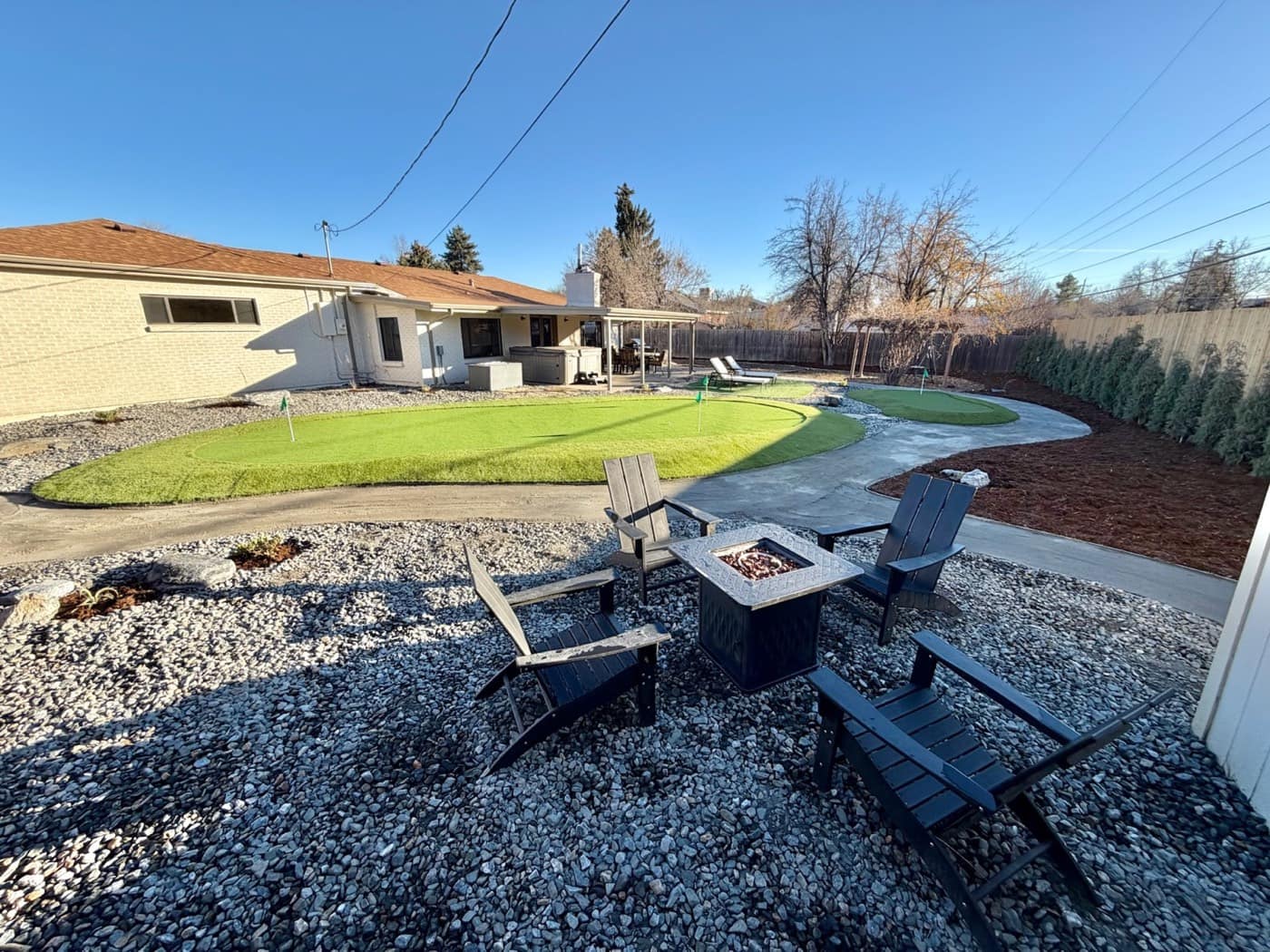
California moved first. In 2026, the state banned intentionally added PFAS in synthetic turf — the first state-level prohibition of its kind. The artificial turf industry noticed. So did buyers.
In Denver, the questions are arriving faster than most installers are prepared to answer them. Parents are asking about chemicals on the surface their kids play on. Dog owners want to know what their animals are licking off their paws. Homeowners who just spent $15,000 on a turf installation are wondering whether what's in their backyard was tested by anyone independent before it shipped.
These are the right questions. The answers are more complicated than a manufacturer's spec sheet, and most of what circulates as "PFAS-free" in the landscaping industry doesn't hold up to scrutiny. Here's what PFAS-free actually means, which brands have earned the credential, and what to ask before you sign a contract.
2026
California banned PFAS in synthetic turf — the first state-level prohibition
3x
Higher PFAS detection rates on older crumb rubber fields vs. newer product lines
0
PFAS detected in third-party tested SYNLawn and FieldTurf product lines
What PFAS Is — and Why It Ends Up in Turf
PFAS stands for per- and polyfluoroalkyl substances — a class of more than 12,000 synthetic chemicals that share one defining characteristic: the carbon-fluorine bond, one of the strongest in chemistry. That bond is why they're called forever chemicals. They don't break down in the environment, they don't metabolize normally in the human body, and they accumulate over time in soil, water, and tissue.
PFAS entered the artificial turf supply chain through backing materials, surface coatings, and infill. Manufacturers used fluorinated compounds to improve durability, moisture resistance, and stain resistance — useful properties in a product designed to live outside for 20 years. The problem is that those compounds migrate. They leach into soil beneath the turf, run off into drainage systems, and transfer onto skin and paws on contact.
Older crumb rubber infill — made from recycled automobile tires — had the worst profile. Crumb rubber can contain PFAS alongside other compounds of concern: heavy metals, polycyclic aromatic hydrocarbons, and volatile organic compounds. The industry has largely moved away from crumb rubber for residential installations, but it's still in widespread commercial use, and older inventory product is still being installed by contractors who haven't updated their spec sheets.

Why It Matters in Denver Specifically
Denver's climate accelerates some of the concerns. Turf surface temperatures in direct Colorado sun regularly hit 150–170°F in summer — heat that increases off-gassing from synthetic materials and accelerates any leaching from backing or infill. Kids playing on hot turf, then touching their faces or eating without washing hands, represent a real exposure pathway. Dogs licking their paws after a run on an older turf field represent another.
Denver also sits on the Front Range aquifer system. PFAS that leach through turf backing into soil eventually find groundwater. Colorado regulators have been increasingly active on groundwater contamination — the state has adopted some of the country's more aggressive PFAS monitoring standards for drinking water — and the regulatory direction suggests that what's acceptable in a backyard installation today may not be acceptable in five years.
The California ban is the leading indicator. Colorado typically follows California's environmental regulatory trajectory within a few years. Specifying PFAS-free turf now isn't just a health decision — it's a hedge against the possibility that non-compliant product becomes a liability in a future sale.
What "PFAS-Free" Actually Means
The phrase "PFAS-free" has become a marketing claim, which means it needs to be interrogated. There are meaningful differences between verified PFAS-free products and products that simply haven't been tested — or haven't been tested using methods capable of detecting the full range of PFAS compounds.
The gold standard for PFAS testing in turf applications is EPA Method 1633, which screens for 40 individual PFAS compounds across a broad chemical class range. An older method, EPA Method 537.1, tests for a narrower set of compounds and is considered insufficient for comprehensive evaluation. When a manufacturer or installer cites "PFAS-free" testing, ask specifically which method was used and what year the testing was conducted — because product formulations change and older test results may not reflect current manufacturing.
Third-party independent lab testing is the other key distinction. A manufacturer running internal QC tests on its own product is not the same as an independent laboratory testing product pulled from active inventory. Any credible PFAS-free claim should come with a certificate of analysis from a third party — not a marketing statement in a brochure.
Brands with Verified Credentials
These are the manufacturers whose PFAS-free claims are backed by documentation we consider credible — not just marketing assertions.
SYNLawn
SYNLawn's EnviroLoc+ backing is made from soy-based renewable content and holds USDA BioPreferred certification — independently verified. Their product systems qualify for up to 24 LEED credits, and SYNLawn Colorado operates locally on the Front Range. The plant-based backing approach sidesteps fluorinated coating concerns at the source rather than testing for them after the fact.
FieldTurf
FieldTurf has pursued third-party lab verification for PFAS-free materials across their residential product lines and holds ISO 14001 environmental management certification. Their recently manufactured fiber product contains no detectable PFAS per independent testing. The ISO 14001 certification adds supply chain and manufacturing process accountability beyond product-level testing.
Global Syn-Turf Denver
Global Syn-Turf's Denver distribution hub offers PFAS-free product lines with independent lab testing available at the product level. Having a local operation means shorter supply chain between testing and installation — product is less likely to sit in a distribution network where inventory age and batch changes introduce uncertainty. Ask for the specific batch test report, not just the product line certificate.
The Questions Worth Asking Before You Sign
-
?
Can I see the third-party test report? — Not the spec sheet. Not the product brochure. The certificate of analysis from an independent lab. If an installer can't produce this on request, they can't verify the claim.
-
?
Which test method was used? — EPA Method 1633 screens for the broadest range of PFAS compounds. Method 537.1 is narrower and increasingly considered insufficient. If an installer doesn't know which method, that's an answer.
-
?
What year was this product manufactured? — Older inventory may predate improved manufacturing standards — or predate the testing that verified those standards. A test report on a 2023 batch doesn't certify a 2021 product still in a warehouse.
-
?
Who is the turf manufacturer? — Any installer who can't immediately name their manufacturer is operating with insufficient supply chain knowledge. Product provenance matters for documentation, warranty, and PFAS verification.
-
?
What infill are you using? — Crumb rubber infill from recycled tires has a different risk profile than natural alternatives. Ask specifically — cork, coconut husk, and silica sand are cleaner options that don't carry the same concerns.
Red Flags and Green Flags
Red Flags
-
⚠
Can't name the manufacturer — Vague answers about sourcing are a supply chain red flag — and a PFAS verification dead end.
-
⚠
"Eco-friendly" with no documentation — Marketing language without a certificate of analysis means nothing. Ask what it's backed by.
-
⚠
No knowledge of test method — If the installer can't tell you whether testing used EPA 1633 or 537.1, the claim isn't verified.
-
⚠
Old inventory product — Spec improvements in newer manufacturing batches don't apply retroactively. Year of manufacture matters.
-
⚠
Crumb rubber infill as default — Still common, still cheaper, still carries a different risk profile. Not automatically disqualifying — but requires explanation.
Green Flags
-
✓
Third-party COA on request — A certificate of analysis from an independent lab, for the specific product batch being installed.
-
✓
Named manufacturer with public credentials — SYNLawn, FieldTurf, Global Syn-Turf — brands with documented programs, not just claims.
-
✓
EPA Method 1633 testing — The broader screening method — indicative of a serious verification approach rather than a minimum-compliance posture.
-
✓
Natural infill specified — Cork, coconut husk, or silica sand — cleaner profile, often better heat performance than rubber.
-
✓
Knows manufacture year — Can tell you exactly when the product was produced and match it to the test documentation.
What Xeris Specifies — and Why
When we install artificial turf, we specify PFAS-free products from manufacturers who have third-party verification on their current product lines. That means SYNLawn and FieldTurf are our primary options for residential work — both have the documentation to back the claim. For infill, we default to natural alternatives over crumb rubber wherever the project allows: cork and silica sand over recycled tire material.
We ask for current batch documentation before specifying a product for installation. Not because we distrust our suppliers, but because "PFAS-free" at the manufacturer level can drift as raw material sourcing changes — and the only way to know what's actually going into a client's backyard is to check the current certificate, not the one from two years ago.
We also pair turf installations with native plantings where the design allows. Artificial turf doesn't have to be the only element — and integrating turf areas with native perennials, decomposed granite, or drought-adapted shrubs gives the installation ecological depth it wouldn't have on its own. A PFAS-free product in a well-integrated design is a different thing entirely from a synthetic monoculture, and that distinction matters for how the yard performs over time.
If you're evaluating artificial turf for a Denver yard and you want a straight answer about what we'd install and why — get an estimate. We'll tell you what's in the product, what the documentation shows, and whether artificial turf is even the right call for your specific yard.
Get an Estimate from an Installer Who Can Answer These Questions
Xeris Landscaping installs PFAS-free artificial turf across Denver, Lakewood, Arvada, and the Front Range. We can show you the documentation — and tell you straight whether turf is the right call for your yard.
Xeris does this work. See our Artificial Turf Installation service in Denver — what's included, what it costs, and how to get a free walkthrough of your property.