

Low-Maintenance Landscaping in Denver: What It Actually Looks Like
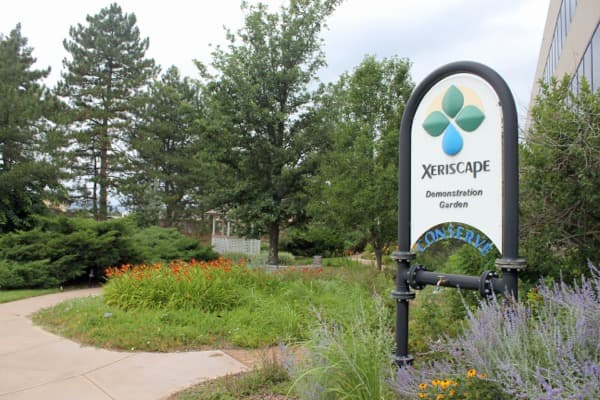
Most Denver homeowners who want low-maintenance landscaping don't want a moonscape — they want something that looks intentional and cared-for without demanding three hours every weekend. The problem is that "low maintenance" means different things in different climates. In Denver, a rain garden that works in the Pacific Northwest is a disaster. A lush cottage garden that's manageable in the Midwest becomes a constant fight here.
Here's what low-maintenance actually looks like in Denver — realistic options based on the climate, the soils, and how people actually live.
Why Traditional Landscaping Isn't Low Maintenance in Denver
Kentucky bluegrass — the default Front Range lawn — needs 30–35 inches of water per year. Denver gets about 15. The gap is entirely artificial, paid for by your irrigation system and your water bill, and maintained by weekly mowing, annual aeration, overseeding, and fertilizing that the grass needs to survive in a climate that doesn't support it naturally.
Perennial beds planted with non-native species have the same problem: they're fighting the climate instead of working with it. They need more watering, more soil amendment, and more intervention to survive Denver's semi-arid summers and hard winters.
True low maintenance in Denver means designing with the climate rather than against it — native and adapted plants that have evolved to handle exactly what the Front Range delivers.
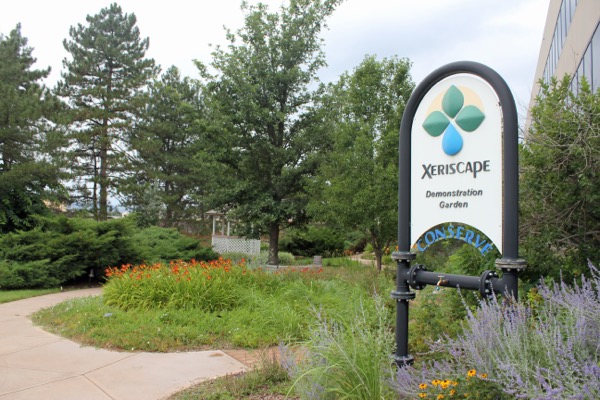 decomposed granite replacing traditional lawn" style="max-width:100%;height:auto;display:block;margin:16px auto;" />
Native plants and rock mulch — the combination that makes landscaping genuinely low maintenance in Denver's climate.
The Low-Maintenance Framework: 4 Design Principles
1. Right Plant, Right Place
A plant that's suited to your specific spot — sun exposure, soil drainage, frost exposure — needs almost no intervention once established. A plant fighting the wrong conditions will always need help. This is the most important single decision in low-maintenance landscaping, and the one most often skipped in favor of picking plants that "look nice" without checking the conditions.
In Denver, this means: native and adapted plants in south and west-facing beds, moisture-tolerant choices in north-facing or low-drainage spots, and nothing that needs more than what the climate naturally provides after year one.
2. Drip Irrigation, Not Spray
Spray irrigation evaporates, blows off-target, and promotes weed germination in the soil surface. Drip delivers water directly to the root zone, reduces surface moisture (less weed germination), and can be set on a timer you adjust twice per year. A properly designed drip system is the single highest-leverage investment in low-maintenance landscaping — it removes the daily/weekly watering task entirely.
Smart controllers (Rachio, Rain Bird) that adjust automatically based on weather data extend this further, reducing water use 15–25% beyond a basic timer system.
3. Deep Rock Mulch
Rock mulch at 3–4 inch depth suppresses weeds, retains soil moisture, and eliminates the need to replenish organic mulch every year. Decomposed granite and crushed flagstone are the workhorses in Denver — affordable, natural-looking, and stays put. Avoid white or bright gravel in sunny spots (glare and heat) and lava rock near plant crowns (retains heat that can stress plants in August).
4. Structural Planting Over Dense Planting
Dense plantings look great in photos but require constant management — dividing, pruning, deadheading, controlling spread. Low-maintenance landscaping uses structural plants spaced appropriately for their mature size, with mulch filling the gaps until they establish. Less work, and the yard looks better as plants mature rather than constantly needing to be beaten back.
The Best Low-Maintenance Plants for Denver
These are the workhorses — plants that establish quickly, perform reliably in Denver's climate, and require minimal ongoing attention.
Structural Shrubs (Plant Once, Ignore for Years)
- Rabbitbrush — native, golden fall bloom, extremely drought tolerant, 3–5 ft. No pruning needed.
- Fernbush — feathery white flowers in summer, native, naturally rounded form that needs no shaping, 4–6 ft.
- Four-wing saltbush — native groundcover shrub, silver foliage, stays 2–3 ft, no water once established
- Native serviceberry — early white flowers, fall color, edible berries for birds, 8–12 ft. Minimal pruning.
Perennials (Color Without Constant Attention)
- Blanket flower (Gaillardia) — blooms June through frost, native, reseeds naturally, needs only spring cutback
- Yarrow — spreads slowly to fill space, summer blooms, extremely drought tolerant once established
- Catmint (Nepeta) — long bloom season, deer resistant, just shear back after first flush for a second bloom
- Prairie coneflower — native, long-blooming, leave seed heads through winter (birds use them)
Ornamental Grasses (Low Care, High Visual Impact)
- Blue grama grass — native, stays 12–18 inches, unique seed heads, one cutback per year in spring
- Feather reed grass (Karl Foerster) — upright form, no floppy spreading, cut back in early spring
- Blue fescue — compact mounds, stays tidy, occasional division to keep looking fresh
For a comprehensive plant list with Denver-specific performance notes, see our complete native plants guide.
Low-Maintenance Design Options by Lot Type
Small Urban Lots (under 3,000 sq ft total)
Decomposed granite or crushed flagstone as the primary surface with 3–5 structural shrubs and a drip system. Clean, modern, almost zero ongoing work. Annual maintenance: pre-emergent in April, spring cutback on any perennials, check drip heads. Total time: under 4 hours per year.
Medium Lots (3,000–7,000 sq ft)
Mixed design with a flagstone patio area, perimeter plantings of native shrubs, and a central area in DG or low-growing native groundcover. Drip irrigation in planted zones. Maintenance is still under a day per year once established.
Larger Lots (7,000+ sq ft)
A naturalistic native prairie planting — grasses and wildflowers — requires almost no maintenance once established but needs patience during the first 1–2 years while plants root. After year two: an annual cutback in March and occasional spot-weeding is the full maintenance calendar.
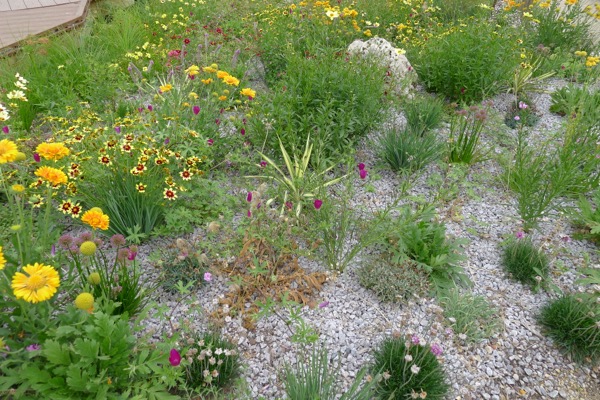
A designed low-water front yard — seasonal color from native perennials, rock mulch groundcover, no lawn, no sprinklers.
What Low-Maintenance Landscaping Costs in Denver
The upfront investment is higher than planting a lawn — but the ongoing cost drops to near zero. A properly designed xeriscape with drip irrigation pays back in water savings alone within 3–5 years, and the labor savings start immediately.
Installation Type
Typical Cost (per sq ft)
Rock + fabric only (no plants)
$2–$5
Rock + structural plantings (no irrigation)
$5–$10
Full xeriscape with drip irrigation
$8–$18
Typical annual maintenance cost (post-year 2)
$0–$200/year
Compare that to a traditional lawn's ongoing cost — $1,200–$2,500 per year in mowing, fertilizing, aeration, and irrigation — and the math is straightforward.
Denver Water also offers rebates for turf conversion projects. For total project cost details, see our full Denver xeriscape cost guide.
Build a Yard That Takes Care of Itself
Xeris Landscaping designs and installs low-maintenance landscapes throughout the Denver metro. We'll assess your property, recommend plants suited to your specific conditions, and build a system — drip irrigation, proper mulch depth, right-sized plants — that performs year after year without constant attention.
Get a free low-maintenance landscaping estimate →
Ready to Build a Low-Maintenance Denver Yard?
Xeris designs and installs low-maintenance xeriscape landscapes across Denver — native plants, drip irrigation, and ground cover that holds up without your weekends. Request an estimate.